


Hobo Nickels
Making money
Jeffrey Kastner
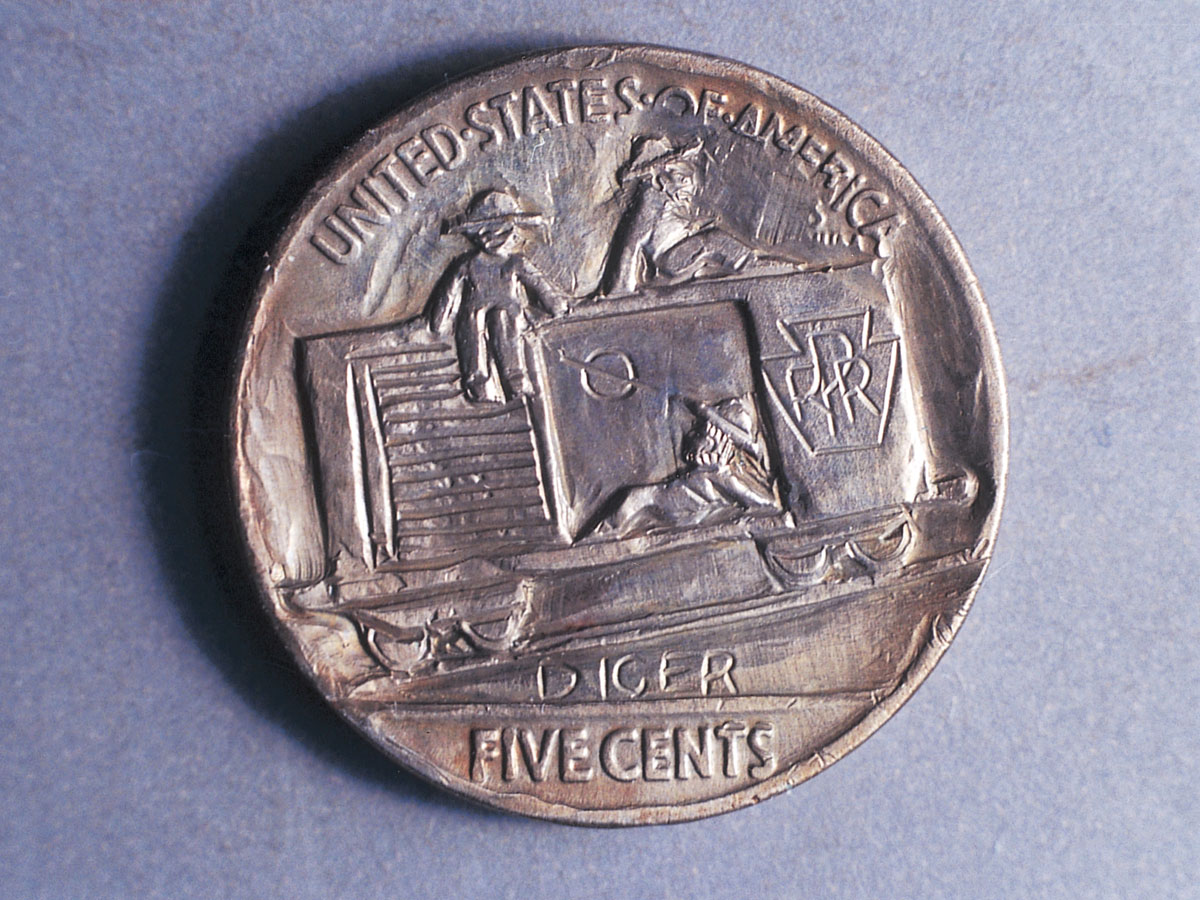
Money may be the root of all evil, but what is the root of money? It exists in a strange gray zone between reality and illusion; the definitive token of worth, it is intrinsically worthless. Unraveling the dizzyingly complex mechanics of money is not easy; indeed, like a car or a computer, as long as it continues to work properly, most people feel no need to even try. I certainly never had—until recently, that is, when a friend introduced me to an obscure little piece of Americana called the Hobo Nickel. What started as a glancing interest in a modest, oddball collectible ended up provoking profoundly tangled questions about what money is and how it functions. Now I fear I will never be able to look at my pocket change in the same way again.
First minted between 1913 and 1938, the “Buffalo” or “Indian Head” nickel was designed by James E. Fraser, a former assistant to Augustus Saint-Gaudens. The coin’s obverse, or “heads,” side featured a Native American profile that was said to be a composite of three individuals from three different tribes—an Ogalala named Iron Trail, a Northern Cheyenne known as Two Moons, and Big Tree, a Seneca that had a brief career in 1920s silent movies. The reverse side of the coin was an image of a bison named Black Diamond, who then lived in New York’s Central Park Zoo.
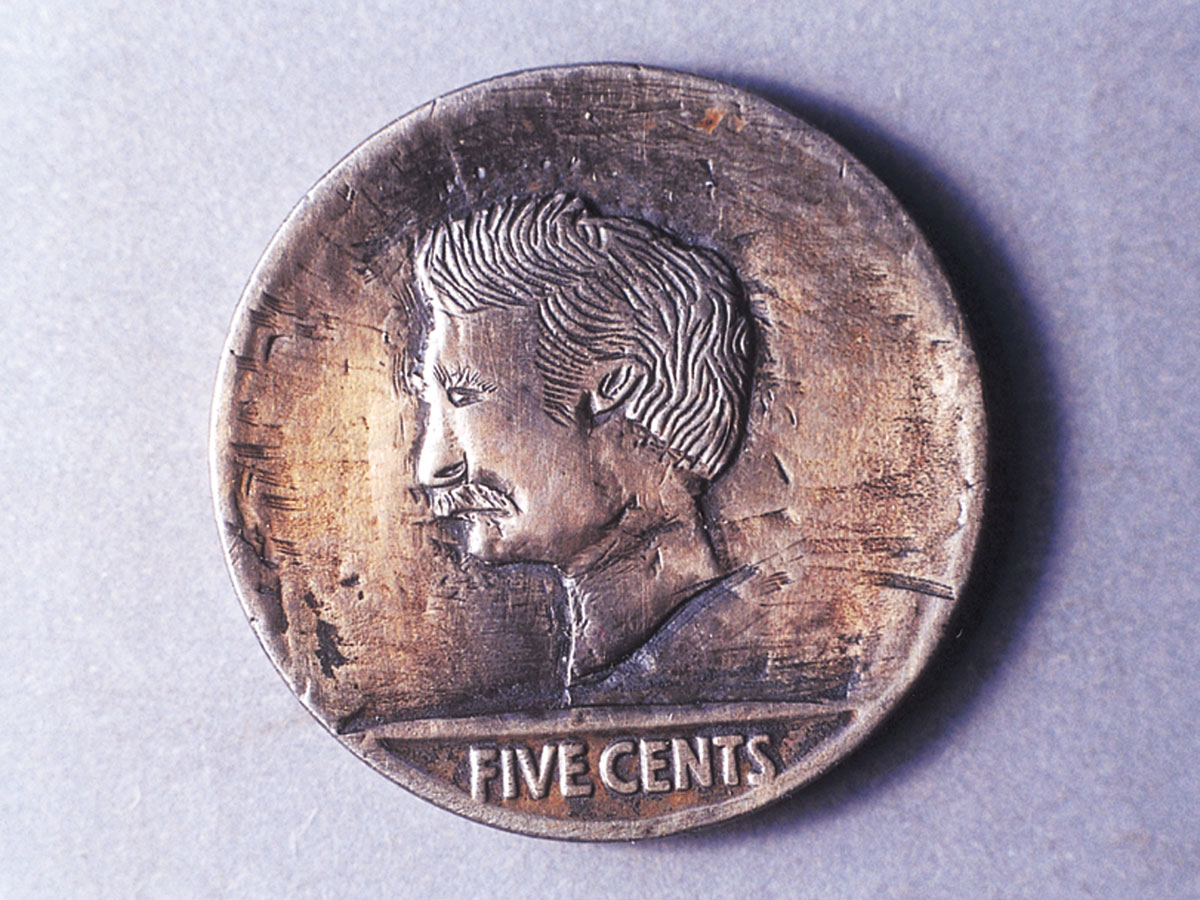
The coin was relatively plentiful—over 1.2 billion were minted during the 25 years of its run. However, a small number of them were adapted by the nation’s then-significant population of itinerant workers, both as a mode of craft and a kind of parallel currency. (During the Depression as many as one out of every five able-bodied individuals was idle; thousands took to riding the rails in search of temporary work as a way of life.) Often using little more than a pen-knife, many of these drifters painstakingly altered the extremely hard copper-nickel alloy, transforming the Indian’s head into profile portraits of friends and loved ones (both male and female), of other hobos, or of themselves. Rare examples also feature alterations of the “buffalo,” typically into donkeys or elephants. These “Hobo Nickels” were a way for the vagabonds to increase the value of the coin so that it brought a more advantageous exchange when used to barter for food and drink, or for lodging or transportation.
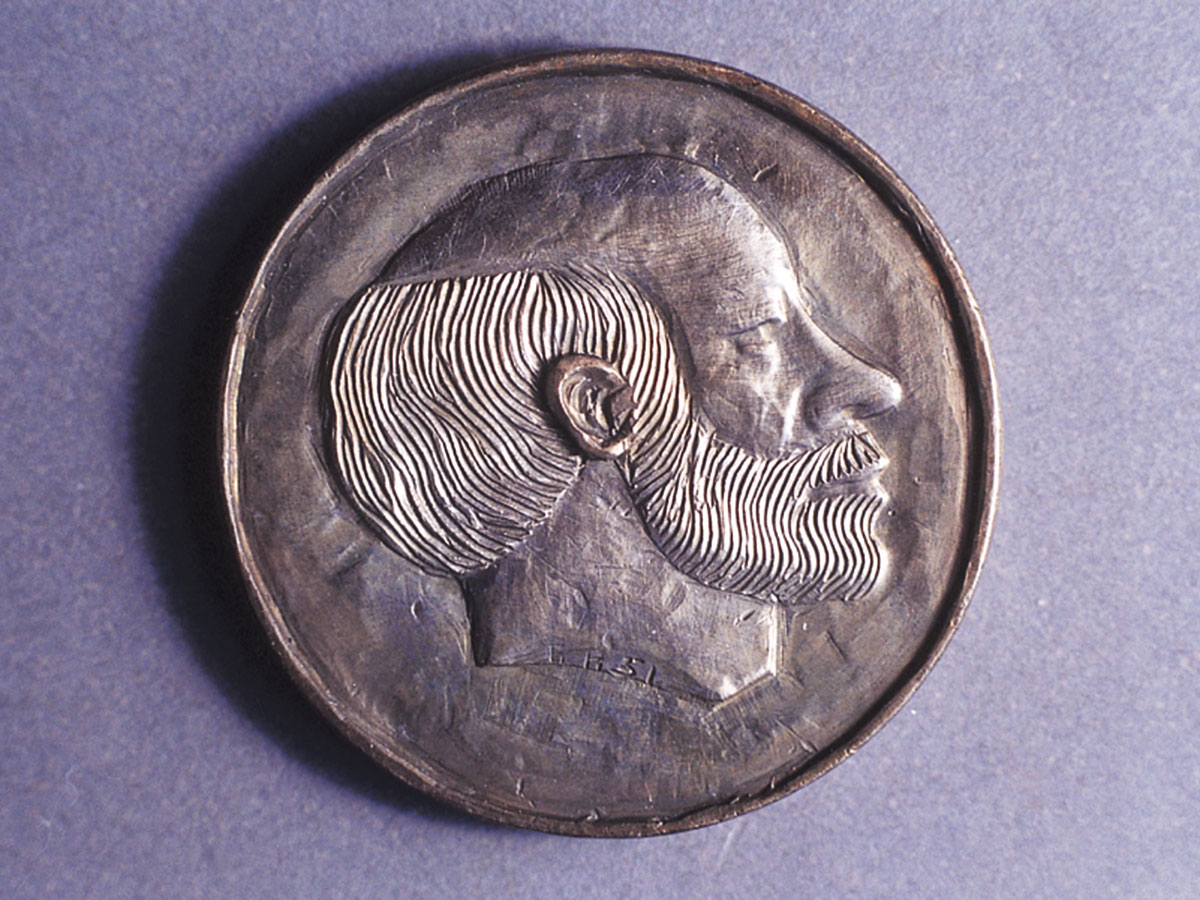
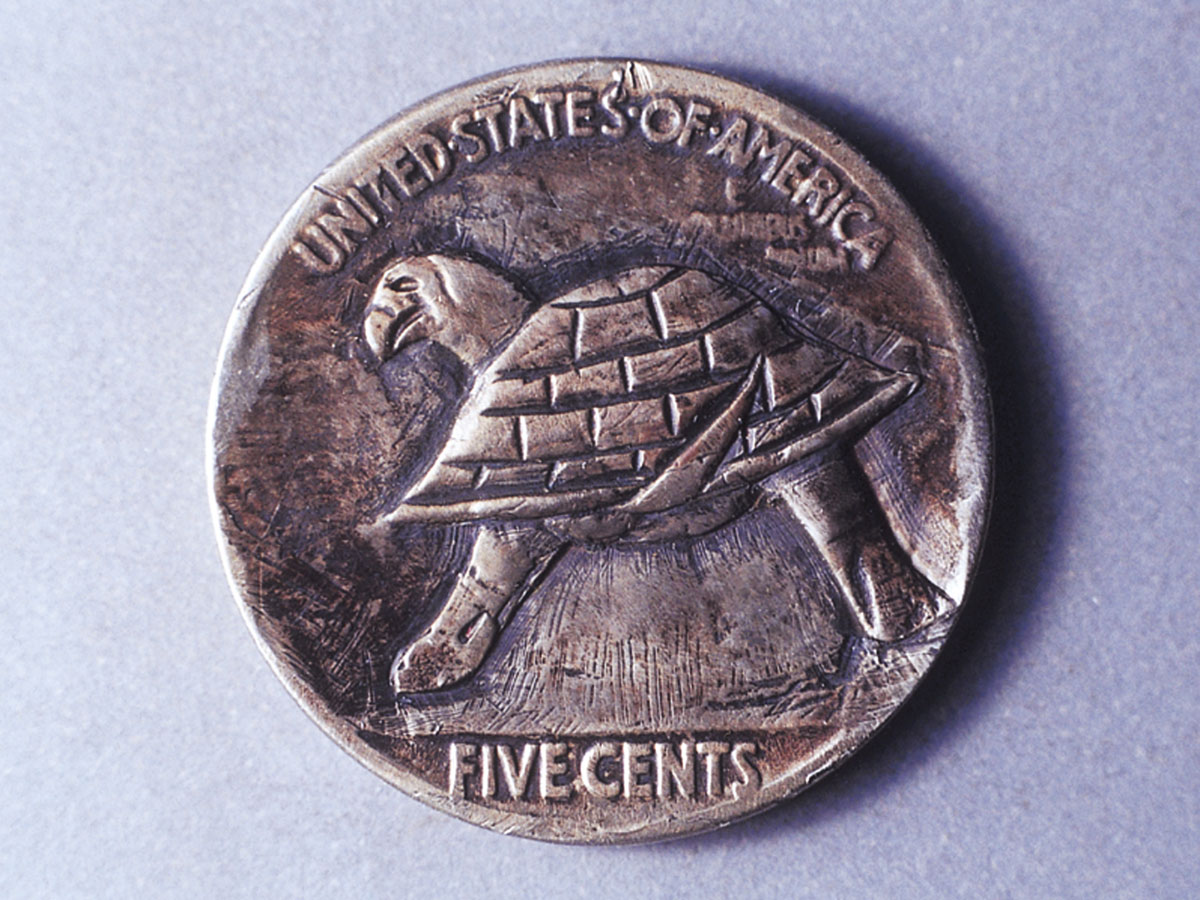
For today’s coin collectors and scholars (including the 350 or so aficionados that make up the Original Hobo Nickel Society, Inc., in which my friend has become a member-in-good-standing), these so-called hobo nickels fall within the category of exonumia, defined by numismatists as “objects of historical interest that resemble coins or currency.” Some have fetched thousands of dollars at auction as examples of vernacular American craft.
From the first examples of state-sanctioned currency in the 5th century B.C., the guarantee of a coin’s value was the precious metal from which it was made; insofar as individuals valued gold or silver by weight, a gold or silver coin was equally valuable. But, of course, gold and silver are inherently not really worth anything either. They are simply socially accepted symbols of value that, in themselves or in the doubly symbolic form of coinage, function as a transactional medium that allows individuals to determine the manner in which different kinds of goods can be exchanged fairly. My wheat; your wood; her goat—despite their obvious differences, each is worth something relative to the other. This worth is based on a complicated combination of factors, from the availability or scarcity of the materials involved to the amount of time and labor necessary to produce the particular commodity in question to the desirability of that product. Money is the social means by which these comparative values are coherently expressed and their circulation facilitated.
This functional structure is so ubiquitous, so much a part of our everyday lives, that it almost defies analysis. Part of the reason for this is the fact that as our system of commerce has evolved and become more sophisticated, it has also become increasingly abstracted. American coins long ago ceased to be made of actual gold or silver; today they simply are gold- or silver-colored. And the raw materials and labor they are designed to draw equivalencies between are virtually invisible to the contemporary consumer. The distance between what money is and what it represents is greater than it has ever been.
In their simple, unassuming way, Hobo Nickels create a small rupture in this seamless value-identity of money. My friend noted that one of the first things that drew her to the nickels was the frisson she felt in seeing something we regard as uniform and immutable defaced. Based on the high prices paid for mis-struck or poorly cut coins on the collectibles market, she is clearly not alone in her response to this disfigurative gesture. But I have come to believe that there is more to this. It is not only an object that is deformed by Hobo Nickels, but also the theoretically immutable system of value that the object represents. They turn a token of commodification into the commodity itself; transform a symbol of labor into a product of labor—perhaps most amazing of all, they manage to make money actually worth something.
Jeffrey Kastner, a contributing editor of Art & Text, writes on contemporary art and culture for publications including the Economist and the New York Times. He lives in New York.
Spotted an error? Email us at corrections at cabinetmagazine dot org.
If you’ve enjoyed the free articles that we offer on our site, please consider subscribing to our nonprofit magazine, which includes unlimited access to all our archives.