


The Mouse’s Tale
Standardized animals in the culture and practice of technoscience
Karen Rader
In mid-September 1999, Princeton University neurobiologist Joe Tsien created a mouse named “Doogie,” named after the TV child prodigy “Doogie Houser, M.D.” Doogie is a so-called “smart mouse,” which means that his memory has been enhanced through genetic manipulation of NR2B, a gene whose product pairs with another gene’s product, NR1, to open what biologists believe to be the physical mechanism of memory in the brain. Doogie’s forebrain now produces some extra NR2B product, so his memory mechanism stays open an extra 150-thousandths of a second. This is enough time, Tsien and his colleagues say, for the creature to outperform other normal mice its age on “standard” tests of rodent intelligence. Time magazine didn’t miss a beat: the smart-mouse study, they proclaimed, “sheds lights on how memory works and raises questions about whether we should use genetics to make people brainier.”[1] Meanwhile, Princeton has filed for a use patent on the NR2B gene, which would give the institution the right to develop drugs to enhance NR2B production in humans.
At first, this scenario may seem to echo familiar motifs of utopian science fiction—a “brave new world” for the four-pawed furry set. On closer inspection, however, things are more complex. Doogie is not a person. He is a non-human animal insofar as he is manipulable: scientists have altered his genes and experimented on his body in ways ethically unthinkable for members of our own species. But in some sense, Doogie is human: he bears a human name and performs functions significant only within our culture. Donna Haraway has argued that scientific animals are liminal objects, and derive social power from this: they are, she writes, “simultaneously research models, cultural metaphors, and potent jokes…we inhabit their narratives and they inhabit us.” A dissonance registers, then, in the brief moment when we, as human social actors and captive listeners of the mouse’s tale, try to translate the use of laboratory mice into something meaningful for us. This act itself interrogates two important boundaries. First, what is the line between human and non-human animals (or, as one scientist put it, to what extent are the patterns displayed by such rodents “comparable to what’s going on in humans”)? Second, in a world where these objects of basic biomedical research wouldn’t even exist save for the efforts of human scientists, how much of the knowledge we obtain from them is “natural” —and how much is technological marvel?
A better understanding of these questions is perhaps best conveyed through a history of the first standardized scientific mammals: Jax Mice™. Jax Mice™ are the rodent products of the Jackson Laboratory of Bar Harbor, Maine, founded in 1929 by biologist Clarence Cook Little—no relation to Stuart Little. Today, Jax, which took its nickname from its old cable address, now houses and distributes more than 1700 genetically defined mouse strains to laboratories all over the world. By many scientists’ description, it is “the scientific bureau of mouse standards.” Its large, diverse, and well-organized stocks all but define the available mice for biomedical laboratory use in the US and abroad. Jax is not the only place you can get laboratory mice, but Jax Mice™ are the sine qua non of laboratory mice.
In mid-1920s the Jackson Lab was merely Little’s pipe dream. A Harvard-trained geneticist, Little sought to create an inde-pendent research institute for the simultaneous investigation of mammalian genetics and cancer. His own work on the genetics of mouse cancers had revealed that inbreeding—that is, breeding within mouse families, usually brother-sister—eliminated much of the variation that made it difficult to draw genetic conclusions from work with mammals. Practically, this resulted in the first inbred-mouse strain used in a laboratory, called dba, an abbreviation for its coat-color genes. Significantly, Little also found that dba displayed a hereditary tendency to develop mammary, or breast, cancer. He conceded that the cancer genetics of dba’s were exceedingly complicated, but argued that cancer should be recognized as a problem “essentially biological in nature.” In many lectures and scientific articles, he called for making it a priority for research.[2]
Little’s initial goal was relatively limited: to use mouse-genetics work to realign the professional and disciplinary boundaries of cancer research. In 1925, only 20% of the research articles in the Journal of Cancer Research was on mouse topics, and only one employed inbred mice or Little’s genetics methods.[3] But after many years of working in isolation, Little left his research behind for college administration—ironically, only to be drawn right back in by demands for his inbred mice. These demands shaped subsequent research and development—even though they came not from fellow scientists but potential patrons. In 1925 he assumed the presidency of the University of Michigan. One year later, while summering in Maine along with the rest of Detroit “high society,” he struck up a conversation about mouse cancer research that captured the imagination of Roscoe B. Jackson, the president of the Hudson Motor Car Company. By this time, cancer was a public-health problem with major media momentum. Government statistics ranked it second only to heart disease as a leading cause of death in America. In 1928 West Virginia Senator Matthew Neely proclaimed before Congress that cancer was “a monster more insatiable than the guillotine [which had] inflicted more suffering and agony upon the American people than all the other diseases known to humanity.”
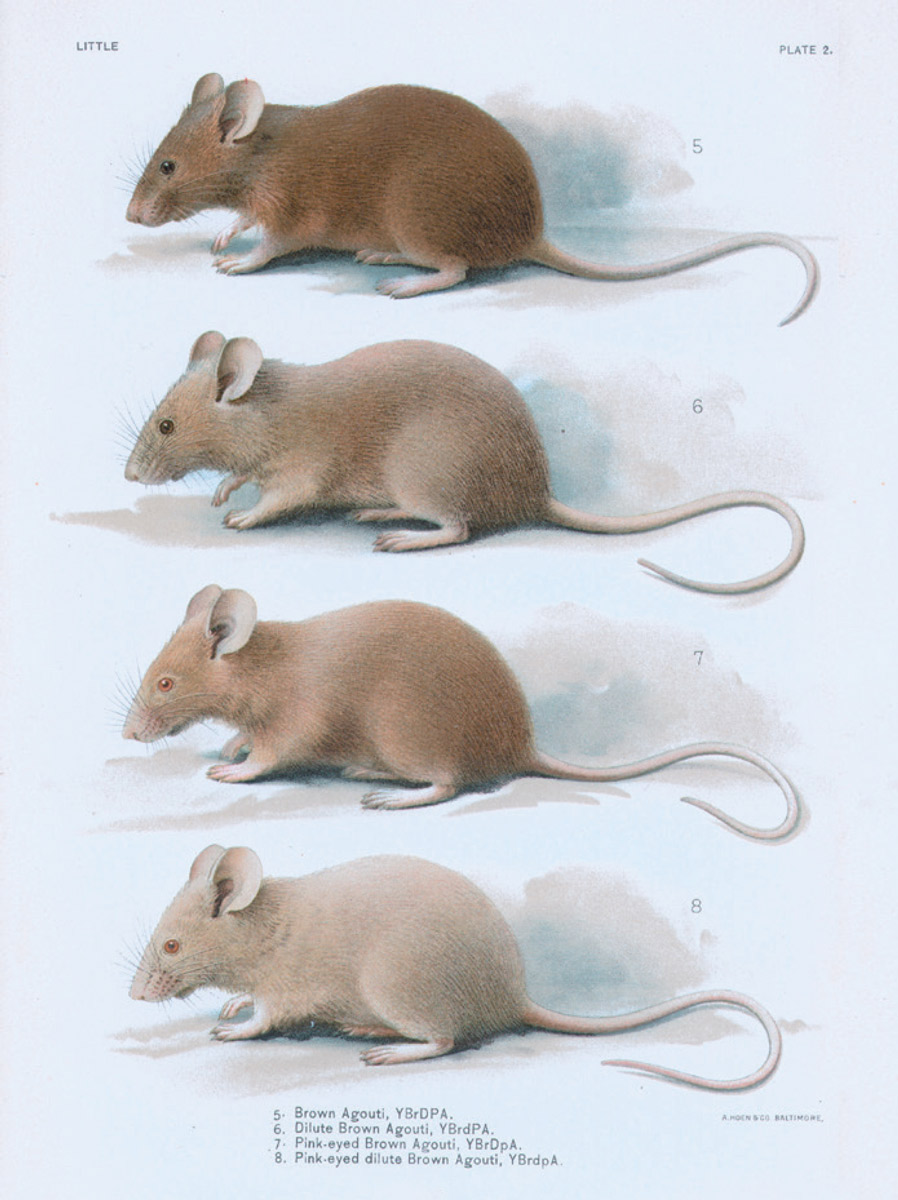
Jackson understood Little’s main point: that the genetics of mouse cancers would contribute to a cure for cancer. But he also noted the independent value of standardized strains for making biomedical research more like a Detroit factory assembly line. “Being a good businessman,” Little later wrote, “Jackson saw that [inbred mice] added efficiency, accuracy, and repeatability to biological work.” Two years later, when Little resigned his presidency over bitter clashes with the Michigan trustees, Jackson and his colleagues pledged more than $70,000 per year over three years to transform Little’s mice into proper cancer-fighting tools.
In October 1929—two weeks before the Jackson Laboratory officially opened its doors in Bar Harbor—the US stock market crashed, threatening to destroy Little’s fledgling enterprise. His Detroit sponsors withdrew almost completely. Before the crash, Little appeared on the verge of convincing both biologists and society-at-large of the value of mouse-cancer genetics. The previous month he had consolidated his power in the medical-research and policy community when he was elected both President of the American Association of Cancer Research and Managing Director of the American Society for the Control for Cancer (ASCC). A group of Little’s researchers at Michigan had also created C57Black, a new non-cancer strain, and found more evidence that there was a genetic explanation for susceptibility to inoculated tumors in the dba strain. In response to these circumstances, Little tried to salvage his institution by again arguing for the suitability of inbred-mouse genetics for cancer research. In his 1931 presidential address to his colleagues, he praised what he called the “growing interest of medicine in genetic research [as well as] the continued growth of that cooperative spirit” between geneticists and medical men. Previous experimental data, Little argued, “[have] many statistical artefacts due to the mixed genetic nature of the mice used.” Use of inbred mice in laboratory experiments, he concluded, would serve to accomplish more quickly and carefully both geneticists’ and physicians’ goals.[4]
But it was Little’s adoption of an industrial strategy that saved the Jackson Lab, and in the process, created the research organisms that scientists recognize as Jax Mice™ today. In 1933, in order to eliminate mounting budget deficits, Little and his group began stabilizing a wider variety of standard strains of spontaneous tumor inbred mice. The target market, in Little’s view, was broad: the “heads of all medical schools and various biological departments in school and universities.” Though the practice behind this enterprise was the same (i.e., inbreeding mice), its immediate goal was significantly different: not the production of mice strains with stable defined genes (as it was when the mice were being used for their own studies of cancer genetics) but the production of mice with predictable tumor incidence.[5] Thus, alongside strains dba and C57Black, Jackson Lab workers developed more specialized low- and high-breast-cancer strains that they weren’t using for their own research. CBA, for instance, showed a 13% incidence of breast tumors, while C3H showed an astounding 90% incidence. They also began inbreeding to stabilize strains with predictable spontaneous lung tumors—strains A, with an 80-85% incidence, and X, an 8% incidence— in the hopes that these might prove useful for lung cancer research—and generate some revenue for Jax.[6]
In mid-March that year Little drafted the first primitive catalog of laboratory mice, which created universal specifications for each of the ten “stocks” available at Jax. The list noted each stock’s known gene make-up, including the number of inbred generations, as a sign of homogeneity; percentage of tumor incidence; and a standardized name. All mice were priced equally: ten cents each plus the cost of delivery, with additional charges for specific sexes. And in the true spirit of American consumer culture, researchers were offered a money-back guarantee in the rare event that mice might arrive dead.[7] Little’s marketing scheme worked: cash orders for these mice quickly came in and nearly exceeded available supply. These orders, in turn, generated enough money to obtain resources for more mouse production.[8]
For several years the Jax “mouse factory” operated with little or none of the fanfare over possible cancer cures that Little’s initial patrons had expected. But in the process of making these creatures widely available, the standards for successful scientific mouse production and use in research changed. Laboratory mouse suitability ceased to be a matter of the mouse’s place in the intellectual economy of a particular research program (cancer genetics), and it became a matter of its place in the free-market economy of biomedical research more generally. The reliability and availability of standardized Jax Mice™ defined what counted as “laboratory” mice (as opposed to creatures one finds in the kitchen cupboards). In turn, the Jackson Lab came to be defined by its ability to meet a wide variety of research user needs in different disciplinary and institutional contexts.
Another later episode in this history reveals how this scientific definition itself could be adapted to suit new social needs—and in turn, how such adaptations affected the science itself. The late 1930s marked a turning point for the American political fortunes of cancer. Anti-cancer sentiments reached a fever pitch both in the media and on the floor of the US Congress. Earlier deadlocks between the executive and legislative branches gave way to a near-unanimous agreement among federal officials that cancer was a problem requiring immediate government attention. Viewed in context, however, this tide of events—which culminated in the passage of the first National Cancer Institute Act—also uncovered a persistent policy anxiety: how exactly should the US government construct a program to fight this chronic disease? Little went before Congress in 1937 to offer inbred mice as one answer to the question. “Let me point out,” he told the gathering of politicians, “that research in the cause of cancer is not entirely a medical problem. The emphasis entirely shifted from working with the slow, unsatisfactory human material to material that is easy to handle, rapid[ly] [bred] and conveniently controllable. That has been the biggest change in cancer research.”[9]
Around the same time, Little also penned a Scientific American article entitled “A New Deal for Mice,” in which he juxtaposed the changes the mouse had undergone in science with respect to the prevailing negative cultural images of the animal. “Do you like mice?,” he asked his readers. “Of course you don’t. ‘Useless vermin,’ ‘disgusting little beasts,’ or something worse is what you are likely to think as you physically or mentally climb a chair.” Against this background, he cast himself as (in his characterization) “attorney for the defense,” and argued that through science, mice have been positively transformed. Inbred mice—as opposed to their wild mouse relatives—“provided a particular service.” Little implored his readers to visit one of Jax’s “laboratory ‘cities’” where “thoroughbred” mice have become “an integral part of man’s helpers.” Inbred mice, he wrote, “[are] the troops which literally by the tens of thousands occupy posts on the firing line of investigation [into the] nature and cure of cancer.”
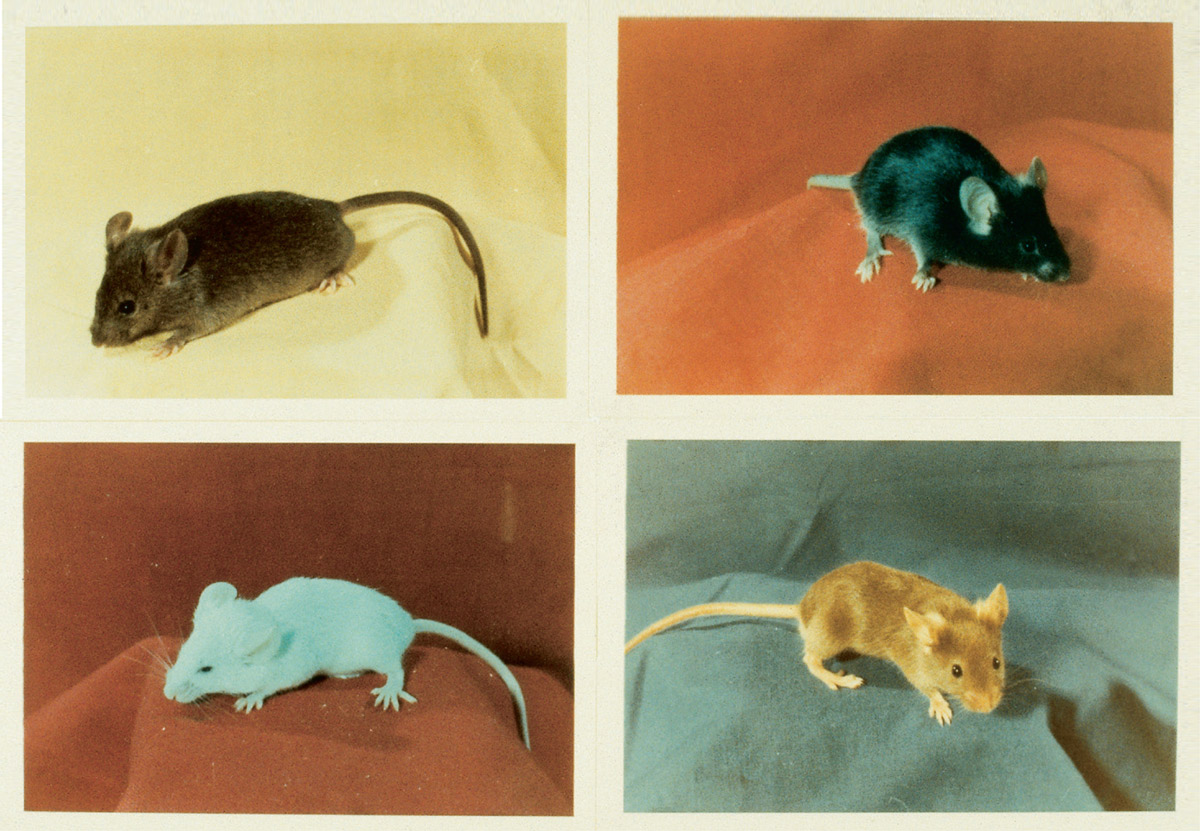
In this and other media outlets, Little’s rhetoric combined to express what had previously been a tacit moral stance regarding the suitability of mice for research. Mouse manipulation (in the form of the in-bred strain creation and production at Jax) and suffering (in the form of such experiments as tumor transplants) was a small price to pay for future human well-being. Cancer research was, as Little put it in a Time cover story, “a hard task requiring patience: trench warfare against a ruthless killer.”[10] A few weeks later, 274 of Jax’s “Bagg-albino” cancer mice appeared on the cover of Life magazine, introducing readers to the story “US Science Wars Against Unknown Enemy: Cancer.” “Under these circumstances,” Little wrote, “perhaps mankind will accept and develop his relationships with mice in a different light.”[11] “Scientizing” mice was the only way to redeem these otherwise socially useless organisms.
Passage of the NCI Act generated broad social support for cancer research and increased scientific support for inbred mouse production. Ultimately, the Jax mouse’s suitability for experimental cancer studies became institutionalized through a policy that promoted their use for all federally sponsored cancer research. One of the first grants the US government approved was a three-year subsidy to Jax ’s production enterprise, with the hope that this industrial state-of-the-art facility would provide enough mice for NCI cancer research over the next ten years. Shortly thereafter, Rockefeller Foundation Program Officer Warren Weaver visited the Jax facilities and immediately grasped the business value of supporting mouse-production expansion: “Should the proposed increase in breeding facilities be available, Little would... sell approximately 120,000 mice per year.” Ultimately, Weaver agreed to provide $40,000 in additional funds from the Rockefeller Foundation’s Division of Natural Sciences.[12]
Within a year, construction on the first Jax “mouse house” was complete and the new wing housed between fifty- and sixty-thousand inbred mice. Little immediately sent the Rockefeller Foundation’s publicity office pictures for their Annual Review which foregrounded the scaled-up, industrialized nature of mouse breeding that the new building embodied: scientist-workers marking and recording litters of mice and an external view of the modernistic glass and steel production wing. During 1939, 110,000 inbred Jax Mice™ were produced and distributed to mouse workers all over the globe—a 175% increase in two years. In the first six months the building was operational, mouse production itself soared 53%. Jax was also making substantial income on the new arrangement: annual profits from mouse sales doubled between 1936 and 1939, from $7,000 to $14,000. The March 1940 Rockefeller Foundation Trustees Bulletin gleefully reported that Little and his Jax Lab had thus “outwitted the old proverb that you can’t eat your cake and have it too.”[13] Over the next 15 years, Jax’s mouse-supply system grew even more dramatically: by 1953, more than a quarter million mice were sold.[14]
This new “laboratory mouse” was so potent socially because it simultaneously accommodated the multiple goals and values of health policy makers, scientists, and members of the lay public. In the case of policy makers and scientists, these were the need for control, coordination, and timeliness in experimental research; in the case of the public, the utility of research and the morality of using mice for research. Indeed, on this latter issue there was so much agreement that Little could contemplate (in a 1954 letter to his lawyer) the possibility of Jackson Laboratory obtain-ing some publicity by (as he put it) “arousing [Walt] Disney’s interest in...[a] film, to tell the story of our mouse (which might easily be a brother or some other relative of Mickey)....”[15] This film never got made. Though he supported Little’s cancer work, Disney never elected to tell the tale of the laboratory mouse’s kinship to Mickey, perhaps because he realized it would bring the public face-to-face with inconsistencies in their cultural understanding of this animal. Celebrating the innocence and charm of a friendly mouse like Mickey for the sake of entertainment dissolves the boundary between humans and animals; celebrating the laboratory mouse’s sacrifices for the sake of scientific knowledge solidifies it.
Scientists often emphasize a naturalistic explanation for the transformation of mice into model organisms: mice are small mammals that breed readily and often (the young are born three weeks after females have mated), and they are susceptible to many of the diseases that afflict human beings (such as cancer). But paying closer attention to the historical process by which Jax Mice™ came to dominate early-20th century biology-research laboratories suggests a more complicated interpretation: the suitability of these animals for research was not pre-determined, but engineered. These rodents’ physical bodies, as well as their representations, were not static. They were adapted and constructed for a scientific culture that valued genetically controlled answers to biological and medical questions. Laboratory mice, then, are only as human and as natural as they need to be. They possess chromosomal constitutions enough like ours that the knowledge obtained from them can be (within a research context) convincingly applied to human health problems, but not so much like ours as to make the experimental manipulation of their genomes ethically problematic to most of society. And their bodies constitute a space that Bruno Latour would call “technoscience,” because they are inhabited at once by both natural knowledge of mammalian processes and its controlled manipulation and application— by, in Latour’s words, “all the elements tied to the scientific practice no matter how dirty, unexpected, or foreign they seem.”[16]
- Michael D. Lemonick, ”Smart Genes?” Time, vol. 154, no. 11 (13 September 1999), pp. 54–59 and cover photo.
- C. C. Little, “The Relation of Heredity to Cancer in Man,” Scientific Monthly, vol. 3, no. 2 (August 1916), p. 198.
- By 1925, the situation remained roughly the same: the percentage of mouse articles was about 20% and inbred animals were used in only one study among this group. I am very grateful to Gail Schmitt for research assistance with the cancer journal article counts.
- C. C. Little, “The Role of Heredity in Determining the Incidence and Growth of Cancer,” American Journal of Cancer, vol. 15, no. 4 (October 1931).
- On this point, see also Ilana Löwy and Jean-Paul Gaudillière, “Disciplining Cancer: Mice and the Practice of Genetics Purity,” in The Invisible Industrialist: Manufactures and the Production of Scientific Knowledge, eds. Jean-Paul Gaudillière and Ilana Löwy (New York: St. Martin’s Press, 1998).
- Cf. Leonell C. Strong, “The Production of the cba Strain of Inbred Mice: Long Life Associated with Low Tumor Incidence,” British Journal of Experimental Pathology, vol. 17, no. 1 (February 1936); “List of Stocks,” in letter to Warren Weaver, 4 December 1937, RF Archive, RG 1.1; 200D, Box 143, 1774, Rockefeller Archive Center, Tarrytown, NY (hereafter, RAC-NY); “Supply Department, Stock List,” 1 July 1938, Box 7-2, Jackson Laboratory Archives, Bar Harbor, Maine (hereafter, JLA-BH); C. C. Little and P. A. Gorer, “The Genetics of Cancer,” in Hans Gruneberg, The Genetics of the Mouse (Cambridge: Cambridge University Press, 1943).
- Interestingly, Little first solicited some small commercial mouse breeders/pet dealers to determine the “market price” for their non-genetically-controlled mouse material, and he set the cost for his material below “industry” averages. CCL to Mary Russell and enclosed inbred-mouse sales listing, 3 March 1933, Box 730; Irwin Wachtel to Mary Russell, 18 March 1933; C. D. Haedrich to CCL, N.D.; both box 740: all from the C. C. Little Papers, Raymond Fogler Library, University of Maine, Orono, ME (hereafter, CCL-UMO).
- For replies from medical researchers, e.g. Halsey Bagg to CCL, 4 April 1933, Box 12, JLA-BH; Howard Andervont to William Murray, 29 March 1933; C. W. Turner to CCL, 8 May 1933; CCL to C. W. Turner, 12 June 1933: all Box 739, CCL-UMO. There are no extant Jackson Lab annual or trustees reports for the pre-1938 period, and I have found no other source that mentions the numbers of mice distributed during this initial period. One annual budget notes a figure of $2,519 in income from mouse sales during the first six months of 1933, but because of varying prices it is difficult to extrapolate from this. See also Jean Holstein, The First Fifty Years at the Jackson Laboratory, 1929–1979 (Bar Harbor, ME: The Jackson Laboratory, 1979), p. 79.
- House of Representatives Committee on Interstate and Foreign Commerce, “Hearing on The National Cancer Act,” Congressional Record, 75th Congress, 1st session, Report No. 1281, p. 4.
- Quoted from a published excerpt of a Little speech in “Cancer Army,” Time, vol. 29, no. 12 (22 March 1937), pp. 40–41. In late 1936, he created the new office of publicity director in the ASCC, and he appointed veteran media man Clifton Read to fill the position. Together, Little and Read engineered a virtual media blitz in many of the popular magazines of the day: see James Patterson, The Dread Disease: Cancer and Modern American Culture (Cambridge, MA.: Harvard University Press, 1987), chapter 5.
- C. C. Little, “US Science Wars Against Unknown Enemy: Cancer,” Life 1 March 1937, pp. 11–17.
- WW Memo to Raymond Fosdick, 20 December 1937; RF Archives, rg 1.1, 200D, Box 143, Folder 1774, RAC-NY.
- “Eating Your Cake and Having it Too,” Excerpt from the RF Trustees Bulletin, March 1940, RF Archives, RG 1.1, 200D, Box 143, Folder 1775, RAC-NY.
- “Twenty-Fourth Annual Report of the Roscoe B. Jackson Laboratory,” 1952–1953, p. 7, JLA-BH. In the last fifty years, many more such creatures have entered laboratories—though it is very difficult to know precisely how many of these are Jax Mice™ or Jax-type mice. In 1965, a total of nearly 37 million mice were consumed in all US laboratories, both commercial and academic (in people terms, a number just under the 1999 population of California). By 1984, that figure had risen to an estimated 45 million—or 63 percent of the total number of animals used by US scientists (again, in people terms, just under the combined 1999 populations of California and New York). See Andrew Rowan, Of Mice, Models and Men (New York: SUNY Press, 1984), chapter 5—though Rowan does not break down these numbers in terms of inbreds vs. outbreds. Later lumped data from the NIH indicate that mice and rats together account for 60–70 percent of all animals used, and approximately 90% of all mammals used—though exact numbers are not made available, presumably to protect ongoing scientific work from animal rights activism. See Office of Technology Assessment, “Report on Lab Animal Use,” 1990. I am grateful to Dr. Louis Siebel for this material.
- C. C. Little to Roy Larsen, 5 November 1953, Box 12, Folder ‘L,’ JLA-BH.
- Bruno Latour, Science in Action (Cambridge, MA.: Harvard University Press, 1987), p. 174.
Karen Rader teaches science, technology, and society at Sarah Lawrence College. She is currently completing a book on the development of the laboratory mouse, and beginning a new project on changing modes of displaying biological science in museums.
Spotted an error? Email us at corrections at cabinetmagazine dot org.
If you’ve enjoyed the free articles that we offer on our site, please consider subscribing to our nonprofit magazine. You get twelve online issues and unlimited access to all our archives.