


The Deadly Rausch
Morphine mania
Hans Fallada
A leading proponent of Weimar Germany’s literary Neue Sachlichkeit, Hans Fallada (1883–1947) made his reputation with the novel Bauern, Bonzen und Bomben (A Small Circus) in 1931. The following year, his Kleiner Mann, Was Nun? (Little Man, What Now?) won international acclaim for its depiction of the petite bourgeoisie caught in the Great Depression, and was made into a Hollywood film in 1934. An alcoholic and a morphine addict, Fallada retreated into “inner emigration” with the rise of Hitler, and was in and out of sanatoria throughout the war.
His last manuscript “Der tötliche Rausch,” the style and content of which recall his posthumously published autobiographical novel Der Trinker (The Drinker) of 1950, abandoned the objective third-person narrative of his earlier novels in favor of a ruthlessly subjective first-person account of the author’s own headlong rush into ruin and resignation. This is the first English translation of Fallada’s manuscript.[1]
It was in that sobering Berlin period that I lapsed into morphine. For a few weeks it went well, since I’d been able to procure a large amount of what we called “benzine,” and was thus spared the morphinist’s worst anxiety: getting the stuff.
Then, the closer my supply came to running out, the heavier my consumption became. I just wanted to become thoroughly sated one more time and then—have nothing more to do with it!
A different life had to be started someday, of course, and with some energy the habit could be suddenly kicked. There were such instances.
But when I awoke that morning face to face with Nothingness, I knew I just had to have morphine at any price! My whole body was filled with an excruciating restlessness, my hands trembled, a frantic thirst tormented me, a thirst that seemed to be localized not only in the cavity of my mouth but in every single cell of my body.
I picked up the receiver and called Wolf. Allowing him no time at all to answer, I gasped with an expiring voice: “Do you have any benzine? Come over right away, I’m dying!”
I lay back in the pillow exhaling a sigh of relief. A deep, festive release. A presentiment of the coming pleasure made my body soft: Wolf will come with the car, I will plunge the needle in, feel the rush of the syringe, and then life will be beautiful.
The telephone pealed and Wolf announced himself: “Why did you just hang up? I can’t bring you any benzine. I don’t have any more myself. Today I’ve got to go out hunting.”
“An injection, a single injection, otherwise I’ll die, Wolf.”
“When I don’t even have any?”
“You do. I know for certain you do.”
“But my word of honor…”
“Well I can hear in your voice that you’ve just had an injection. You’re completely sated.”
“Tonight at four, for the last time.”
“And me without any since eleven. Wolf, come quick.”
“But there’s no point to it. Better to come with me. I know a reliable pharmacy. Hire a car, we’ll meet at Alex [Alexanderplatz] at nine.”
“You won’t stand me up? Swear to it!”
“No nonsense, Hans. Nine o’clock at Alex.”
I stand up slowly, the shoehorn feels heavy, my limbs are weak and continually tremble, my reassurance has vanished. My body no longer has faith in me to give it morphine.
I accidentally discover on my calendar that today is an unlucky day. Then I sit down in my armchair and cry. I am suffering so much and I feel that I will have to suffer even more today, and I am so weak. If only I could just die! But for a long time, that too is something I’ve known I’m too cowardly for; I’ll hold out.
Then my landlady comes to me and says something consoling, but I don’t interrupt my sobbing, simply motioning with my hand for her to go away.
But she continues to speak, and I slowly detect from her words that I have burned holes in my bed again this very night. I nudge some money over to her, and since she goes out quietly it must have been enough.
Even now I still don’t go out, although the clock shows that it’s just nine. I observe the coffee I pour into the cup and ponder: caffeine is a toxin, ….I think, it agitates the heart. There are many cases where people have died from it; hundreds, thousands of cases. Caffeine is a heavy toxin, certainly almost as heavy a toxin as morphine. I’d never thought of it! Caffeine will help me….
I toss down one, two cups.
I sit there a moment, staring in front of me and waiting. I don’t want to admit it to myself, and yet I know that I’ve just played a trick on myself, deliberately deceiving myself once more.
My stomach refuses to keep the coffee down. I feel how my entire body trembles and is covered with cold sweat. I must get up. I’m shaking as if from cramps, and then my gallbladder kicks in with fits and starts.
“That’s the end,” I whisper.
After a while I’ve recovered enough to stand up and walk. I finish dressing and go out to find a car.
Wolf, too, is unpunctual.
He’s actually still waiting. I can tell at once from looking at him that he has a fever too. His pupils are extremely dilated, his cheeks sunken, and his nose protrudes sharply.
We go to a post office and write out a dozen prescriptions. We examine our handwriting and three prescriptions that aren’t scrawly enough are torn up.
We hire a car.
Wolf has the car stop a few feet from the ‘reliable’ pharmacy, and he hobbles out looking sick and miserable.
I lean back.
In a quarter of an hour I’ll have benzine! It’ll be high time too, my body’s getting progressively weaker, my stomach aches like crazy, it craves and craves morphine.
I lean back, secure in the pillow, close my eyes and picture to myself how beautiful it will be when I sink the needle in. Only a few minutes, an altogether tiny instant, and deep, festive tranquility will stream into my limbs. I’ll need merely to smile and morphine will fulfill my every wish. I need but close my eyes and the whole world will belong to me.
Now Wolf is coming.
I see right away that he didn’t get anything. He tells the chauffeur the next address, sits next to me and shuts his eyes. I notice how heavily he’s breathing. He wipes the sweat from his brow with his hand.
“Those aren’t human beings, they’re animals! To let one suffer so. I’ve had to beg them not to call the police.”
“I thought the pharmacy was supposed to be reliable.”
“The old chemist’s assistant wasn’t there, just a young guy. The kids are all as sharp as straight-razors.”
The car stops.
Wolf makes another attempt. In the meantime I resolve to give up morphine by myself. Now that I’m dependent upon Wolf and the pharmacies, I still can’t ever scrape together my daily dosage of eight injections. I’ll just simply give myself one less each day, that’ll work. Right now, though, I’ll give myself two, three injections right away, one after the other, so that I feel properly sated one more time…
Wolf is already coming back again. He utters another address and we drive off.
“Nothing?”
“Nothing.”
It’s enough to drive one to despair. There the people are, strolling about, making thousands of plans and looking forward to tomorrow, and there are flowers and light and women. For me, all that is dead. I think about the hundreds of pharmacies Berlin has, and lying in a cabinet in each one of them there are all kinds of morphine, and no one’s giving me any. I have to suffer, and yet it’s so simple, the pharmacist would only need to turn a key … Of course he’s going to get money; as much as he wants. I’d gladly give him all my money.
Wolf gets out again.
Suddenly I get the idea that this constant stopping in the vicinity of pharmacies might make the chauffeur suspicious. Perhaps he’d inform the police? I enter into conversation with him, telling him a long story, that we’re both dental technicians, my friend and I, not dentists, and that anesthetics for painless tooth-extraction are not something that dental technicians can readily acquire, but must get prescriptions from the dentist, and the prescriptions are expensive. And for that reason we are driving to each pharmacy, in order to…
The chauffeur says yes, yes to all of it and nods his head. But the way he smiles to himself makes me suspect him further. I’ll dismiss him as soon as possible, but not right away, or else he’ll finger us to the next patrolman.
Wolf comes back. “Get rid of the car.”
My heart beats faster: “Do you have something?”
“Get rid of the car.”
I pay the chauffeur, and give him an insanely large tip. Then: “Do you have some stuff?”
“Get real! Today is so cursed that no cadaver wants to take my prescriptions. We have to do it some other way. I’ll keep trying in the pharmacies, and you go to a doctor and try to steal some blank prescription forms.”
“I can’t do that, every doctor will see right away that I’m a morphinist from the state I’m in today.”
“Let that go, will you. The main thing is that you lift prescriptions.”
“And what do we do with the prescriptions? With morphine they always call the doctor, as you well know.”
“Then we’ll travel to Leipzig on the midday train. Only, take a proper handful of them, so that we have enough to last a few weeks.”
“Alright, I’ll try it. And where do we meet?”
“In Pschorr at one o’clock.”
“And if you acquire something in the meantime?”
“I’ll see to it that I catch you beforehand.”
“Alright then…”
“Good luck.”
I set out. This is not the first time I’ve embarked on such a tour. I’m of more use at doing such things than Wolf is, because I look more trustworthy and am better dressed.
But today I’m in much too pitiful a condition. I can’t walk properly. Although I keep wiping my hands with my handkerchief, the next moment they’re dripping wet again, and I must wipe them incessantly.
I won’t get anywhere, I know it now already.
As I pass a brandy shop, it occurs to me to help myself by having a schnapps. But already at the second glass I have to duck out, my stomach refuses to keep it down, just like the coffee. I sit on the repulsive toilet and cry again.
When I’ve regained my composure somewhat, I go out.
At the first doctor’s the whole waiting room is packed. An insurance-plan doctor, no doubt lazy. They need prescription forms for their private patients so seldom that they usually keep them in the desk.
I quietly slip away again.
On the stairway I feel so bad that I have to sit down on one of the steps. I can’t get up any more. I resolve to lie down here and stay until someone finds me and takes me to the doctor. Certainly then he will give me an injection out of sympathy. Then it’ll be my turn a lot sooner than if I were to sit for a long time in the waiting room.
Someone’s coming up the stairs, I stand up quickly and pass him as I reach the street. A few blocks further there’s another doctor’s shingle. I go upstairs. The consultation hour hasn’t begun yet, good, so I’ll wait. I sit there alone, thumbing through the magazines.
Suddenly something occurs to me, I stand up and eavesdrop at the door to the consultation room. Nothing is stirring. Very slowly I depress the door-handle.
The door opens just a crack, I spy inside, I see nobody. Inch by inch I open the door further and sneak into the consultation room. There’s the desk, and in that wooden stand there… I put out my hand, for I think hear a sound, and dash back to the waiting room, stumbling into the armchair.
Nothing is stirring anymore, no one is coming, and I’ve outsmarted myself. But now I’m too discouraged to risk it one more time. I sit there inert. Minutes pass. I could have emptied the entire desk, and the medicine cabinet too, but I no longer chance it.
The doctor opens the door and invites me to come in.
I rise to my feet, step into the consultation room, make a bow, and introduce myself.
Suddenly uncertainty and sickness fall away from me. I know that I make a splendid impression. I smile, I use a drastic expression with the certainty of a man of the world, who knows how to play cleverly with concepts. I cross one leg over the other, so that my silk socks are visible.
The doctor sits across from me and doesn’t let me out of his sight.
Then I get to the point. I’m traveling through, have an abscess on my arm that’s been agonizing me perniciously, and would the Herr Health Councilor [Sanitätsrat] be so friendly as to examine it and diagnose whether it can be lanced.
The doctor asks me to bare my arm. I show him the swollen, bluish-red spot on my underarm. It is thickly surrounded by a dozen fresh red or scabby-brown healing perforations.
“Are you a morphinist?”
“I was, I was, Herr Health Councilor. I’m going through detoxification. The worst part’s behind me, Herr Health Councilor, nine-tenths cured.”
“Indeed. Well, I’ll lance it.”
Nothing further. Not a word. My certainty has abandoned me.
The doctor turns his back to me, looking in his glass cabinet for scalpel, forceps, cotton. Without making a sound I step onto the carpet, my fingers brush against some paper and….
“Just leave the prescriptions there, my dear sir,” says the doctor coldly and curtly.
I falter.
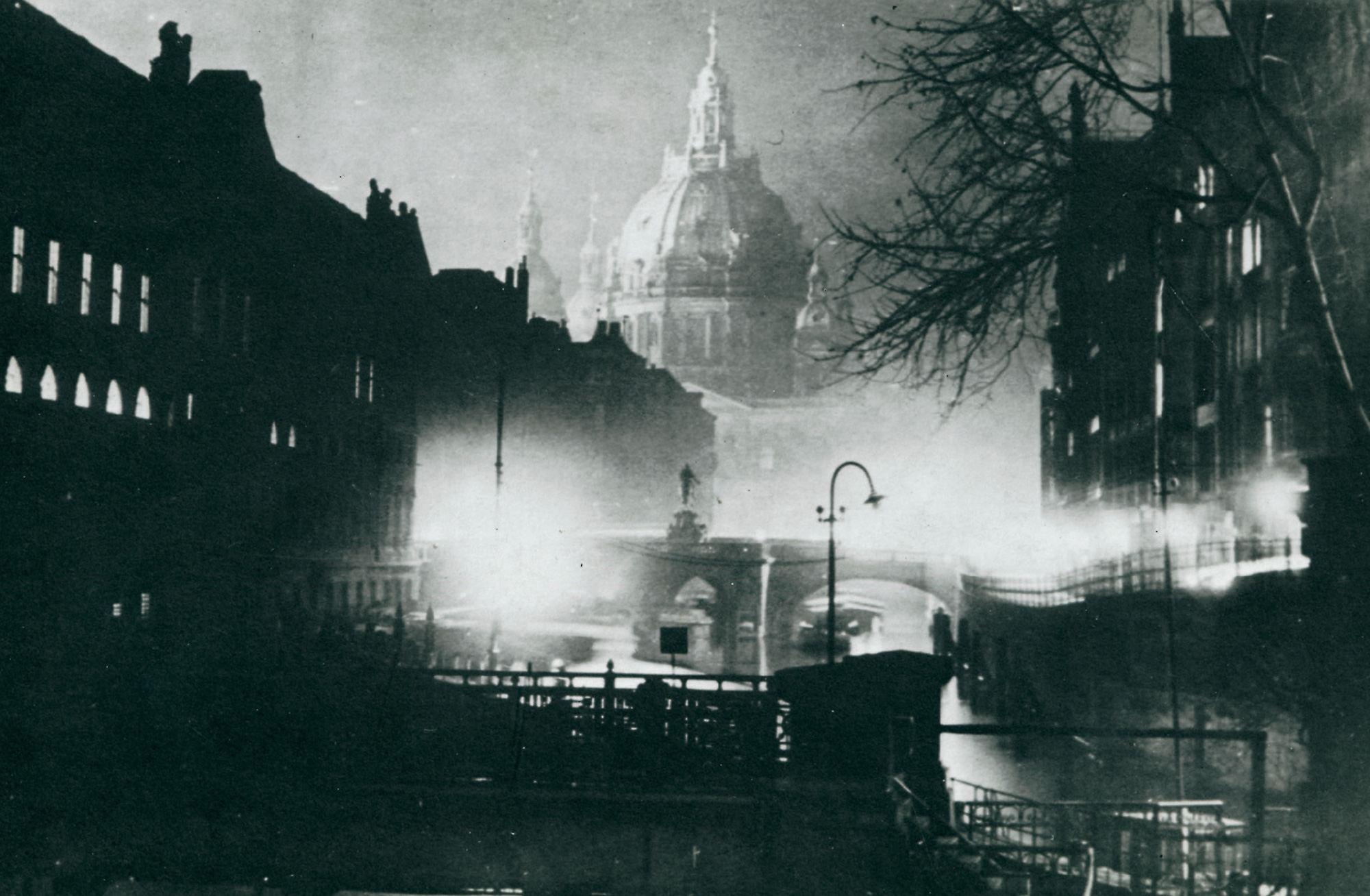
In the same instant, the city appears before my eyes, roaring there below where I’m alone and abandoned to a desperation without equal. I see the streets in front of me full of people hurrying to destinations, to other people, and me alone, forsaken and absolutely at the end. A sob chokes in my throat, prying my mouth open.
Suddenly my face is flooded with tears. “What shall I do, oh, what shall I do? Help me, Herr Health Councilor, just one injection.”
“Calm down, do calm down, we’ll discuss all that. There’s still hope even now.”
My heart is seized by a transport of gratitude, in a few seconds I’ll be relieved of this unspeakable agony, I’ll receive my injection.
My words tumble forth, now life is effortless again, I will cure myself, this will be the last, the very last injection, then no more. I swear it.
“Can I have it at once, right now? But three per cent solution, Herr Health Councilor, and five cubic centimeters, otherwise it doesn’t effect me.”
“I’ll give you one more injection, but you must voluntarily make the decision to enter an institution.”
“But I’ll kill myself, Herr Health Councilor.”
“You won’t kill yourself. No morphinists kill themselves. No, you won’t kill yourself, but it is high time for you to go into an institution. Perhaps it’s already too late. Are you a man of means?”
“A little.”
“Could you afford to pay for a private sanitarium?”
“Yes, but they won’t give me my morphine there.”
“Enough at first. They’ll slowly wean you from it. You’ll be given other medicaments, sleeping medicines. One day you’ll breathe a deep sigh, and you’ll be free.”
I shut my eyelids. I’m defeated. Yes, I’ll take the suffering upon myself, I’ll break the habit. I nod in assent.
The doctor continues: “You understand that I will not allow myself to be fooled. After I’ve given you an injection, I’m going to lock you in the waiting room while I get ready to go. I will not let you out of my sight. Do I have your agreement on this?”
I nod again. I’m only thinking now about the injection I’m going to get right away. And now we begin an argument about the potency of the dosage, an argument that lasts for a quarter of an hour, leaving both of us all worked up. In the end the doctor remains the victor.
I receive two cubic centimeters with three per cent solution.
He goes to the cabinet, opens it, prepares the syringe. I follow him, inspect the label on the ampule to make sure that I don’t get tricked. Then I sit down in a chair. He jabs the needle in.
And now … I stand up briskly and walk across to the waiting room, where I lie down on a chaise lounge. I hear him lock the door.
Yes…
Indeed…
That’s how it is once again….
Life is beautiful. It is so gentle, an auspicious stream effervesces through my limbs and all my tiny nerves sway in it softly and delicately like aquatic plants in a clear pond. I have seen rose petals—and once again I know how lovely a single little tree on the meadow is. Are those church bells chiming? Ach, life is beautiful and gentle. You, too, sweet maiden, I think of you, whom I lost so long ago. Now my only sweetheart is morphine. She is wicked, she torments me without end, but she rewards me far beyond everything conceivable.
This ladylove is actually within me. She fills my senses with a bright, clear light in whose brilliance I perceive that all is vain, and that I live only to savor this transport.
I want to read the dumbest thing from a doctor’s waiting room table. An advertisement will have the fragrance of flowers, and in some inane love story I’ll taste the full flavor of fresh bread that my stomach can no longer tolerate. I want to read.
I open a book. Inside there is a flyleaf, a plain, white flyleaf. I do a double-take: upon this white page, a careful doctor has imprinted his name, address and phone number with a rubber stamp. No, Herr Health Councilor, I’m not going to steal your book. I’m just going to tear out this flyleaf and stick it in my pocket. Once it is trimmed with scissors, it will become the sought after prescription form that will bring perhaps a hundred of such transports. For today, I am in safety.
I am in entirely good spirits. I make a slight motion with my hand, then immediately let it drop again into a normal, comfortable position, and in my hand the surging of the toxin that had been momentarily imperceptible in the motion now betrays the nearness of my ladylove. The effect of the injection has not yet subsided.
And later, … later I’ll have the prescription.
Then I hear the doctor’s footsteps. Don’t I have to go into an institution? My mistress smiles, she knows that nothing will hold me, no one can constrain me. I am alone in the world, I have no obligations, all is vain, only pleasure matters, my ladylove alone I cannot betray.
The doctor comes, opens the door. I take my legs from the chaise lounge and position them slowly and carefully, so as not to startle the toxin in me with a sudden movement.
“Is it time, Herr Health Councilor?” I ask and smile.
“Yes, now we can go for a ride.”
“But just one more injection, Herr Health Councilor. We’re sure to be driving for an hour, and I can’t hold out that long.”
“You are quite sated, my dear sir.”
“But the effect is already subsiding. And you can be sure I’ll kick up a row about it when we’re alone. With an injection in my body, I’ll follow you like a lamb.”
“If it really must be…”
He leads the way into his room. I follow him triumphantly. Ach, he doesn’t know me. He doesn’t know that the prospect of an injection would persuade me to go anywhere he wanted me to.
I receive one more injection, and then we actually leave. I descend the stairs very carefully. I feel the tingling in my body and the lovely, surreptitious, fleeting warmth. Thousands of thoughts are in me, for my brain is strong and free.
Look, the doctor’s opening the car door for me. I climb into the car first, and as the engine turns over and he adjusts his sitting position and fidgets with the convertible top, I open the other door and spring out confidently—for my body is young and dexterous—and immerse myself into the crowd, vanishing into it.
And I never see this doctor again.
• • •
I knew that I’d only dare walk a few steps if I didn’t want the vigorous movement of my legs to scare the morphine away. I looked at the clock. It was shortly before twelve. No doubt it was better to travel to Pschorr now, where I wanted to meet Wolf. But it was clear to me at once that this was not to happen. Then again, perhaps he had come earlier, had noticed that I’d gotten some stuff, and then adieu to every prospect of getting his support.
Did I have to meet him at all? Didn’t I have in my pocket a prescription form that promised me countless glorious injections? If I let Wolf know of the existence of this slip of paper, I have to give up half of this pleasure.
I sit on the comfortable sofa of a wine tavern. A cooler of Rhine wine is standing in front of me. I have filled the first glass to the brim, lift it to my mouth, and take a deep breath of the wine’s bouquet. Then I glance furtively at the bartender, notice that I haven’t been observed, and empty the glass into the cooler. The alcohol would react hostilely to the morphine in my stomach, detrimental to its effect.
My sole thought is to luxuriate in this effect to the very end. And yet I have to keep ordering something to be able to sit here savoring it.
I pour myself another glass and order pen and ink. I pull the flyleaf out of my pocket and trim it into the shape of a proper prescription form with a penknife. It doesn’t quite please me, it seems too wide. I trim away another strip, and now it’s decidedly too narrow. A conspicuous shape for something on which nothing is permitted to be conspicuous.
I begin to get angry. I pick up the paper, place it face down on the table in front of me and look at it closely again. “Too narrow,” I murmur. “Definitely too narrow,” and my anger intensifies. I take the trimmed paper strips and line them up next to the form, trying to press them close together, examining it anew, and discovering that the prescription had previously been just the right size after all.
I curse my impulsiveness. Why didn’t I wait until I was with Wolf? What do I know about prescriptions? He’s the expert at it. In spite of this, I grab the pen and begin to write.
The wineglass bothers me, and I push it away. It still bothers me. No, I can’t write this way. I grab the glass hastily, it falls, and the wine spills out over the prescription. The blue tint from the rubber-stamp flows out over the page, and with it run out all my hopes.
Discouraged, desperate, I lean back. And then I suddenly detect: the effect of the morphine has elapsed. My body is already trembling. And having been abandoned by my sweetheart, naturally I haven’t even completed one prescription.
I stand up, pay the bill and walk to our meeting point.
How sated Wolf is, how fully sated he is! There he is, lying completely relaxed, he barely raises his eyelids and dreams and dreams. I envy him his dreams, I envy him every minute he’s able to wile away in the arms of his beloved, while I am suffering unspeakably.
“Well?” And he’s already reading the failure of my efforts from my sunken and miserable demeanor. He wastes no words: “Hundred,” he says. “A hundred cubic centimeters. Over there. Be careful, don’t take too much, alright? That will suffice for today.”
“Two, three.”
“Fine.” And he falls back into his dream. Taking the precious stoppered flask, I walk to the bathroom. I fill my five cubic centimeter syringe to the top, and now I’m already happy. I lean back…
And … and … a soft jingling sound gives me a start. Next to my arm lies the overturned flask, it’s contents spilling onto the floor. “Wolf,” I think, “Wolf. He’ll strike me dead when he learns about it after all these travails.”
But I’m already pursing my lips, defiant, indifferent. Who is Wolf? Companion of many orgies, advisor, advisee, and yet in the end indifferent, as indifferent as everything is.
I hold the flask up to the light: two, three cubic centimeters are still left in it. I extract it into my syringe. This portion, too, I displace for myself, and my blood surges up simmering, lightning flash after flash bursts in my brain, wild rhythms pound my eardrums.
Wild, wide world! Where every man is alone and each may sink his fangs into another’s flesh. How exquisitely sybaritic. Oh, the adventures that are waiting for me next, the quiet streets where one can maraud girls, the courtyard gates to pharmacies I’ll break into, the bank messengers I’ll rob.
I am omnipresent, I am all things, I alone am world and God. I create and I forget, and it all passes. Oh, you, my singing blood. Surge deeper inside me, my mistress, enrapture me wilder yet.
And I fill the flask with pure water and hand it to Wolf, smiling and full of gratitude. He holds it to the light and says: “Three? No, five.”
I merely reply: “Yes, five.”
And we sit across from each other and dream, and he becomes restless and says: “I want to give myself another shot,” and he goes away.
Then I fetch my hat and slip out, climb into a car, and know myself to be far away from his rage.
I then got the insane idea to try a little of it with cocaine. Morphine is a quiet, gentle kind of joy, white and florid. She makes her lads happy. But cocaine is a raw, impetuous animal. It torments the body, the world becomes wild, distorted, despicable.
I managed it. I procured some ‘benzol’ from a waiter. I made myself the solution and shot three syringe-fulls into my body one right after the next in rapid succession. Images sail past me, bodies tumble over one another, tiny alphabetic letters I read suddenly turn over onto their bellies and I realize they’re animals swarming endlessly over the page, reversing position, producing peculiar word shapes, and I attempt to capture their sense, copying them down with my hand.
But then I discover that I’m talking with my landlady. I want to tell her that I don’t need any dinner, and in my brain I produce the sentence: “No, I don’t eat in the evening,” and with dull amazement I hear how my mouth says: “Yes, today I will murder Wolf yet.”
I dash down the stairs, shove a man aside, and reclaim the open air.
I search for Wolf’s apartment, no, chase senselessly through the city, this way and that, injecting myself on and on, becoming even wilder. Blood is flowing out of many perforation points onto my shirt and cuffs, over my hand.
Madness towers over and engulfs me as I giggle silently to myself every time I hatch some new plan, to set this heinous town with its senseless pharmacies ablaze, to let it go up in flames like a wisp of straw.
And suddenly I’m standing in a pharmacy screaming like an animal. I hurl from me the people who are trying to hold me, shattering a glass pane, and then suddenly someone administers morphine, good, clear, white, florid morphine.
O you, my sweet girlfriend, now I’m gentle again. I feel how the cocaine flees away from her, suspended just for a time from the uppermost point of my stomach—and is then chased away.
A couple of policemen lay their hands on my shoulders: “Alright now, come with us.” And I follow behind them, walking with very small and measured steps so as not to frighten away my girlfriend, and I am blissful, and I know that I’m alone with her, and that nothing else matters.
Translated from the German by Scott J. Thompson
Cabinet wishes to thank Scott J. Thompson for his help in this issue of Cabinet.
Copyright
Hans Fallada, “Der tödliche Rausch” (Berlin: Aufbau-Verlag, GmbH, 1994). The text originally appeared in Neue Illustrierte: actuelle politische Bilderzeitung, vol. 10, no. 47 (1955). Reprinted in Werner Pieper, ed. Nazis on Speed: Drogen im 3 Reich, vol. 1 (Löhrbach: Werner Pieper & The Grüne Kraft, 2002), pp. 81–89. A translation of this book by Scott J. Thompson with the working title Nazis on Speed: Drugs in the Third Reich is currently in progress.
- The German word Rausch is not accurately translated as drunkenness, intoxication, inebriation, or high. The word contains no connotations of toxicity, and its onomatopoetic senses of whirring, booming, and swirling defy Latinisms. For this reason, it has been kept in the original.
Hans Fallada (1883–1947) was a leading proponent of Weimar Germany’s literary Neue Sachlichkeit. Among his books are Bauern, Bonzen und Bomben (A Small Circus) and Kleiner Mann, Was Nun? (Little Man, What Now?).
Spotted an error? Email us at corrections at cabinetmagazine dot org.
If you’ve enjoyed the free articles that we offer on our site, please consider subscribing to our nonprofit magazine. You get twelve online issues and unlimited access to all our archives.