


A Guide to Bristol from Antipodal Dunedin
A truly psycho geographical romp
David Eggleton
We gather from this curious book, Webster’s Timeline History: Bristol, 1000–1893, that the city is riverine, located inland, but that its outlook is maritime, running on coastal tides—so much so that in days of yore, the lower reaches of the town were repeatedly flooded to the rooftops by storm tides from the Bristol Channel surging up dramatically between the banks of the River Avon. An ancient settlement site, built on seven hills that climbed from marshes and wetlands now drained, Bristol originally straggled along a skein of streams and waterways that were gradually coaxed into rivers and canals able to transport barges and ships. Boggy, soggy Bristol was once Albion’s riposte to ancient Rome, if not to rivalrous London.
The word “Bristol” constantly sounds out as an invocation to spirits of place, somewhere between a prayer and a swear word, giving Professor Parker’s pedagogy a phantasmagorical quality, as if Bristol itself were a cabin-fever dream of flotsam and jetsam floating past on the surface of murky waters—a jumble of personages, declarations, proclamations, drums, trumpets, and battle flags.
Yet, as in a fever dream, Bristol is not the answer; rather, it is a kind of riddle, or an absurdity of random-information overload. This is Bristol posed as a pedantic Polonius, tittering, concealed behind an arras, and waiting to be run through by a bare bodkin in some Merrie Olde England production featuring Hamlet the Dane. This is a papery Bristol, pinned like a butterfly to a board, crumbling to sneeze-worthy dust. Professor Parker’s long and winding road of paragraphs also twins this Bristol Channel Bristol, confusingly, with other more diaphanous Bristols, located in North America. There is no one true Bristol; rather, all is shape-shifting vapor and skimmed data smog. It is erasures, absences, ellipses, resembling concealed trapdoors, priest holes, and smugglers’ staircases leading nowhere: Bristol as nebulous maze.
Bristol also has aspirations as palimpsest, as mnemonic. The word “Bristol” tolls the hours, and the mystique of the name summons ghosts that might be illuminated by the flaming brands of the town’s officious midnight watch, century by century. Imagine a drastically altering townscape growing backward in time toward Neolithic beginnings, where an anchorage and a bridge glimmer through early morning fog and mist by a river crossing. Soon, a fort and then a castle command the heights; and here the timeline begins to sparkle with glimpses of goods being marketed and traded. Dykes are dug, forges are built, coins are struck, sword hilts are raised, and rulers are deposed. Clashing their goblets of mead, Empress Matilda and Queen Matilda go head to head, while King Stephen of England, related to both, dances his own galliard between them. Many bishops preach many sermons.
Revenants emerge, covered from head to toe with old mortar, lime, and grit. Wraith-like, they struggle and flap out of the cocoons of shrouds, cerements, and winding sheets. Branded, mutilated, missing bits and pieces, they drag themselves up from mortuary, charnel house, and ossuary, always eager to have their say and fling their bones about in wassail and hey-nonny-nonny.
Medieval records, written on scrolls of parchment and vellum and salvaged from the nibblings of mice, beetles, and doddery archivists, tell of fanfares for Rex and Regina in their finery amid entourages of ladies and knights—and of the Netflix-series-ready intrigues of court and clergy. Sententious twaddle is elevated into articles of faith, and blasphemers are whipped from pillar to post, led to the scaffold, or hanged on gibbets.
Two ships enter Bristol Channel in 1348 and bring the bubonic plague ashore at Bristol, an early indication of the seaport’s role as a gloomy doomscroller watching trouble arrive. The Treasurer of England, someone called Lord Scrope, is pardoned (or was it executed?) by King Henry IV. The pageantry of aristocrats disporting in tournaments is sullenly observed by a shuffle of knaves and churls; out in the surrounding countryside, whole villages of knouted peasants are put to the plough, the grindstone, or the wheel to reinforce the feudal order. In abbey and cathedral, seraphic choirs process between recumbent brass effigies, as incense censers are swung.
Mostly, though, Bristol is its traders, and in the thirteenth century, the Society of Merchant Venturers materializes and rapidly becomes “unduly influential and overly secretive,” going about its business of making money hand over fist for an elect group of the wealthy, who threaten and menace both on shore and at sea as they finance not only privateers and buccaneers, but also explorers, such as the Italian John Cabot (Giovanni Caboto), a kind of understudy to Christopher Columbus, who discovers Newfoundland before returning to Bristol and more plotting and scheming.
As the fourteenth and fifteenth and sixteenth centuries whizz by, Bristol is—in Parker’s distracted telling—undoubtedly dour, or perhaps just mechanical. Plague is followed by pestilence. Medicine administered by holy quacks is a symbolic code as likely to kill as cure. Jests and pleasantries turn on gallows humor.
Sectarian religious quarrels grow louder as Bristol advances through the sixteenth century and then into the seventeenth. The mercantile trade becomes a form of economic salvation. The Society of Merchant Venturers, obeying the ruthless logic of capitalism, launches restless departures for the New World. The Society’s ships transport tobacco, sugar, and cotton back to Europe, and enslaved West Africans (from present-day Gambia, Nigeria, and Ghana) to plantations in the Americas, the latter activity paralleled by a shadowy tradition of Bristol-based marauding and piracy in search of spoils, booty, plunder.
But while Bristol’s commerce in slavery dates back millennia, dissenting Christian religious sects and new rationalist groups lead to the gradual emergence of a strong abolitionist movement in the town. Findings attest that around the same time that John Cary, Bristol merchant, ventilated the pamphlet A Discourse on the Advantage of the African Trade to this Nation, Ann Yearsley authored A Poem on the Inhumanity of the Slave-Trade, Humbly Inscribed to the Right Honourable and Right Reverend Frederick, Earl of Bristol.
It’s the war of the pamphleteers, one that began as a moral crusade, but was really about available flavors of Christianity, from bitter and harsh to poisonous. By their accusations shall ye know them. Sermons are printed that typically fulminate against both “deluded Protestants and wilfully-blinded Papists.” The medium becomes the message as the printing presses of Bristol gear up to crank out pamphlets, broadsides, and broadsheets. Hysteria over “popish plots” culminates in the English Civil War: Catholics against Puritans, Royalists against Republicans, Cavaliers against Roundheads. Oliver Cromwell’s Ironside cavalry tramples roughshod, slashing right and left with broadswords, and his New Model Army skewers the remaining opposition on pikestaffs. Bristol becomes a Puritan stronghold. Reactionaries and radicals continue to contend with one another as the arrival of peaceful Quakers, and then philanthropic Methodists, is resented and challenged, before eventual acceptance.
A clearly angry William Prynne disseminates the oddly capitalized pamphlet The Quakers Unmasked, And Clearly Detected to Be but the Spawn of Romish Frogs, Jesuites, and Franciscan Fryers; Sent from Rome to Seduce the Intoxicated Giddy-Headed English Nation. A similarly galvanized Denis Hollister publishes his broadside titled The Skirts of the Whore Discovered, and the Mingled People in the Midst of Her, in a Letter Sent by D. Hollister to the Independent Baptiz’d People, Who Call Themselves a Church of Christ in Bristol, but Are Found to Be a Synagogue of Satan. Yet, gradually, Bristol becomes a center for the Quaker movement—whose adherents “sit in silence and contemplate the light”—and soon a rallying point for Methodists, whose John Wesley proceeds to publish, and then lay before the public, evangelizing hymnbooks.
For a moment in the early eighteenth century, Bristol was England’s second city, bested only by London, thanks to the profits made by its seagoing merchants—and by the slavers and the buccaneers. The name “Bristol” became synonymous with piracy and marauding. In 1712, two ships, the Duke of Bristol and the Duchess of Bristol, sailed along the coasts of the Caribbean, sacking towns and capturing ships and bringing the haul back home. It was an age when the port’s quays and wharves pullulated with caricatures of piratical demeanor, as seasoned freebooters, waving the trinkets of El Dorado, rolled ashore and made for tavern and brothel, grogshop and gin mill, to carouse with strumpets and bawds over barrel of rum, cask of wine, hogshead of brandy.
But it was also an age of mutinous tars and marooned mariners, of castaway sailors and shipwrecked missionaries. Writers from Daniel Defoe to Jonathan Swift to Robert Louis Stevenson fastened onto seafaring tales told in Bristol, in turn conveying them as literature, wherein experiences recollected around the hearth became fabulous and mythic. As Christopher Columbus’s biographer, Filson Young, said about John Cabot, he, “like Columbus, believed he had seen the territory of the Great Khan, of whom he told the interested population of Bristol some strange things.”
Bristol resident and opium addict Samuel Taylor Coleridge, stalked by holy dread, wrote of Kubla Khan’s Xanadu in a house along the coast from Bristol, before breaking off suddenly, claiming only to be half-finished as a result of having been brought down to earth by a mundane visitor from Porlock. He also set the beginning and end of his narrative poem “The Rime of the Ancient Mariner” within the psychogeography of Bristol.
Throughout the eighteenth century, Bristol printers also produced staggering amounts of Scriptural exposition, and Professor Parker seems to have managed to track down and list most of it, to stupefying effect. But it was also the Age of Enlightenment, of adventurous scientists and experimental chemists, as well as various visionaries tripping out on new-fangled substances. Amongst the chemical pioneers, there was Sir Humphry Davy, the discoverer of laughing gas, who organized sealed-chamber parties where attendees could inhale. The Bristol poet Robert Southey was one of those to gigglingly endorse this practice: “Davy has … invented a new pleasure. … I am sure the air in heaven must be this wonder-working gas of delight.”
The index is toponymous in the extreme, and attempting to use it to navigate Bristolian identities is doomed to failure, much like the career of the poet Thomas Chatterton, who was born in Bristol in 1752 and who died in London at the age of seventeen with a reputation as a plagiarist, forger, fraud. He was, however, rehabilitated in afteryears and championed by the British Romantic poets. Chatterton is anachronistically identified as a fifteenth-century figure, but of course he does not appear in the index because he is not a place-name. What’s interesting in this context about Thomas Chatterton is that he was an antiquarian, obsessed by the Church of St Mary Redcliffe, which he often visited as a child as it was directly opposite his family home. Imagining a medieval monk called Thomas Rowley, Chatterton then wrote the Rowley poems for him, channeling poems onto parchment that he claimed to have discovered in a chest or closet hidden within the Gothic architecture of St Mary Redcliffe. Truly, Chatterton was a tutelary spirit of medieval Bristol, a catalyst, but you will not learn that here—though Chatterton’s fabrication of Thomas Rowley is briefly glossed in the course of an item about something else. As for the index, there’s a Radcliffe, noted twice, but no Redcliffe. The array of Bristol place-names looks impressive but is unreliable. The index invites you to connect nothing with nothing, not even a shower of arrows becoming rain.
The district of Redcliffe is important to the story of Bristol. Its subterranean network of tunnels—burrowing under it since medieval times, this now semi-derelict labyrinth once provided sandstone for celebrated Bristol glassware—remains a source for horror stories and tall tales of all stripes.
From earliest days, a sense of distrust and duplicity—of dread—hung like a miasma over Bristol, with its dedication to following the glint of gold and silver wherever it led. Through the eighteenth and into the nineteenth centuries, while puritanical and hard-headed about business, Bristol also swaggered jauntily, girning and glowering, as if with a secret of the fantastical as another side to its character. There’s an air of skullduggery, too, with the skull and crossbones, the Jolly Roger, always in a sense just below deck and ready to be run up at an opportunistic moment.
Let a medley of quotations serve to evoke this aura of sinister criminality clinging to ostensibly straitlaced Bristol. “Ay, all of them at Bristol lost their heads,” declares a character in William Shakespeare’s King Richard II, while in The History of Tom Jones, a Foundling, Henry Fielding says: “It is almost dark, and the road is difficult to hit; besides, there have been several robberies committed lately between this and Bristol.” In his Lives of the Poets, Samuel Johnson states, “Thus was he again confined to Bristol, where he was every day hunted by bailiffs.” In The Pickwick Papers by Charles Dickens, Mr. Pickwick orders “his faithful servitor … to start for Bristol immediately, in pursuit of the fugitive.” R. D. Blackmore writes: “And the shock of that sight at Bristol flew to his weakness, and was too much for him.”
A fit subject for warning sermon after warning sermon, Bristol unmistakably at every literary turn proves a place of unease and mystery: Don’t turn your back in Bristol. In 1748, an anonymously authored pamphlet was published advising on Bristol Markets. In Consequence of Many Frauds and Impositions Practised by Sundry Persons Carrying Provisions for the Inhabitants. And to set out immediately “in quest of her unknown friend at Bristol,” as a character in an 1808 novel by Maria Edgeworth does, is to suggest a journey toward peril and imminent danger.

In 1872, in his story “The Wrecker,” Robert Louis Stevenson conveys a sense of the furtive nature of the city with his narrator’s observation: ‘The second incident was at Bristol, where I lost sight of my gentleman some hours.” In a novel by George Gissing, Born in Exile, published in 1874, the author tells us: “On the morrow Goodwin was back in Bristol, and here he dwelt for another six months, a period of mental and physical lassitude.” In 1869, T. W. Goodwyn’s moralizing pamphlet Vagrants: Their Number, Gains, Habits, Haunts, and Requirements, Especially in Bristol was prominently published in Bristol.
These are but a selection of the assiduously collected quotations that gaze knowingly at Bristol’s heritage. At what the mutinous Long John Silver in Stevenson’s Treasure Island tells Jim Hawkins is a “black heart”—speaking of his own, which undoubtedly belongs to Bristol. Their schooner, the Hispaniola, has departed along the River Avon for the high seas and the promise of treasure, and those on board will now make their own laws.
Of course, this is not the whole of Bristol. Bristol has ever celebrated, for example, “the nature, properties and effects of its medicinal water” for healing purposes, as Edward Shiercliff affirmed in 1789. Bristol, making a variety of such hot-water assertions somewhat uncertainly, is the poor person’s Bath.

Beyond this are legacies of various social justice warriors that did make a difference. Samuel Plimsoll, born in Bristol, was the prime mover of the Plimsoll Line, written into law by an 1875 Act of Parliament that “Plimsoll, though regarding it as inadequate, resolved to accept.” This established a waterline mark intended to deter “‘coffin-ships’—unseaworthy and overloaded vessels, often heavily insured, in which unscrupulous owners were allowed by the law to risk the lives of their crews.”
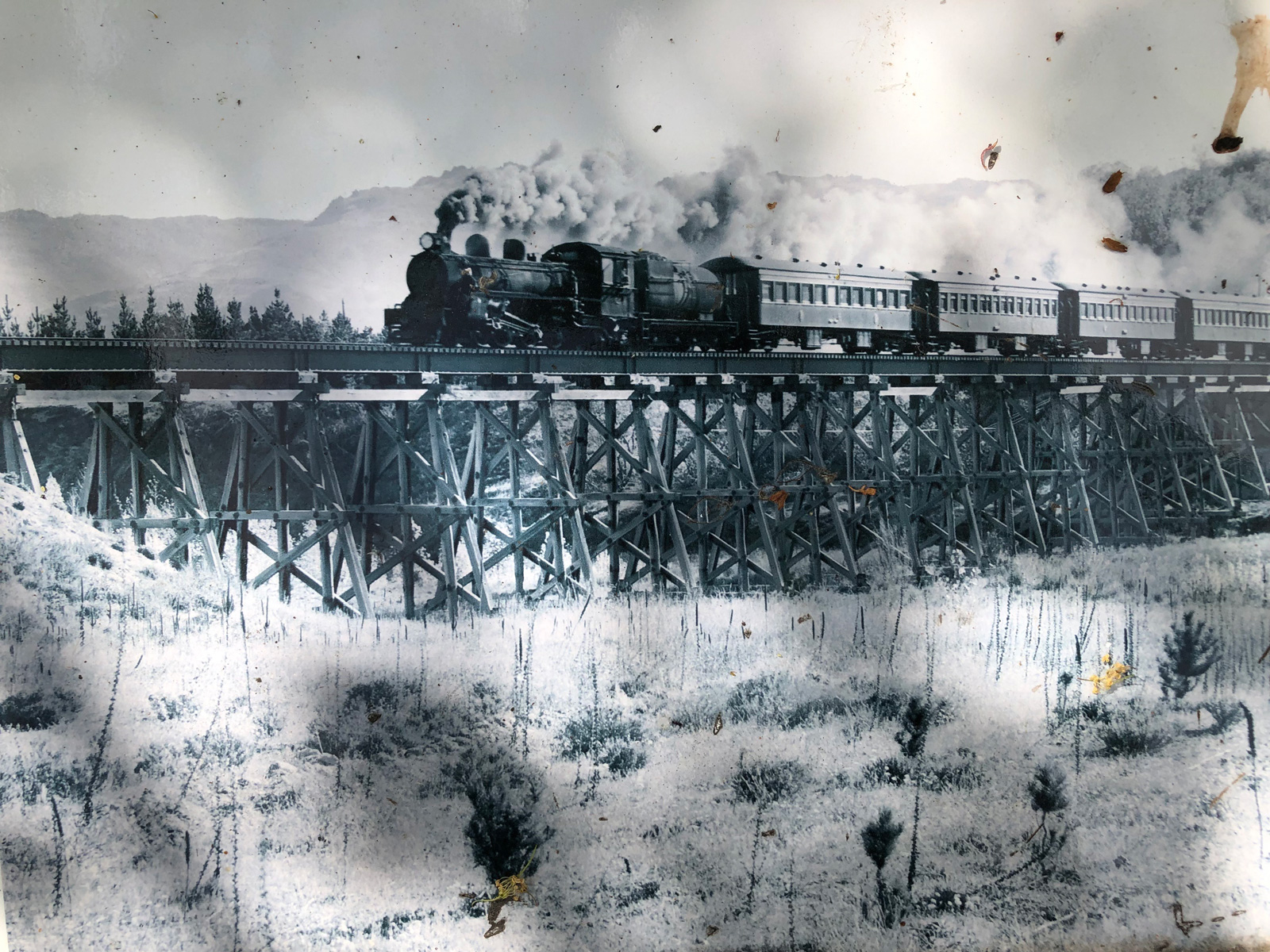
And no guide to Bristol would be complete without mention of the Clifton Suspension Bridge flung over the Avon River Gorge, the one engineering feat of the mid-nineteenth century that united Bristol’s scattered consciousness of place, circling back to beginnings. Yet, predictably, there is no discussion of the bridge as being integral to Bristol’s sense of its actual history, even if its original creator, Isambard Kingdom Brunel, is acknowledged as the chief engineer of the Great Western Railway company, whose line connecting its hometown of Bristol with former nemesis London became one of the wonders of Victorian Britain.

But in the nineteenth century, the writing was on the wall for Bristol as a great entrepôt, as if daubed in mud from the silted-up River Avon. As Samuel Smiles—author of the best-selling manual Self-Help—stated in 1858: “Bristol is sinking in commercial importance.” Glub-glub. Increasingly, Bristol would be left with its memories, transcribed by colloquiums of clerics; with the relationships between its buildings and the past, traced out by flaneurs; and with its mysterious labyrinth of sandstone caves, where genealogical fetishists might gather to whip themselves roundly for the sins of their ancestors.
Read David Eggleton’s review of Webster’s Timeline History: Bristol, 1000–1893 here.
David Eggleton is a writer and critic who lives in Dunedin, New Zealand. He is a co-editor of Katūīvei: Contemporary Pasifika Poetry from Aotearoa New Zealand, published by Massey University Press in 2024. Eggleton is a former New Zealand Poet Laureate, whose most recent poetry collection, Lifting the Island, was published by Red Hen Press in September 2025.
Spotted an error? Email us at corrections at cabinetmagazine dot org.
If you’ve enjoyed the free articles that we offer on our site, please consider subscribing to our nonprofit magazine, which includes unlimited access to all our archives.