


Ingestion / Tempting the Temperate
The smorgasbord in the age of Ozempic
Thea Applebaum Licht
“Ingestion” is a column that explores food within a framework informed by aesthetics, history, and philosophy.
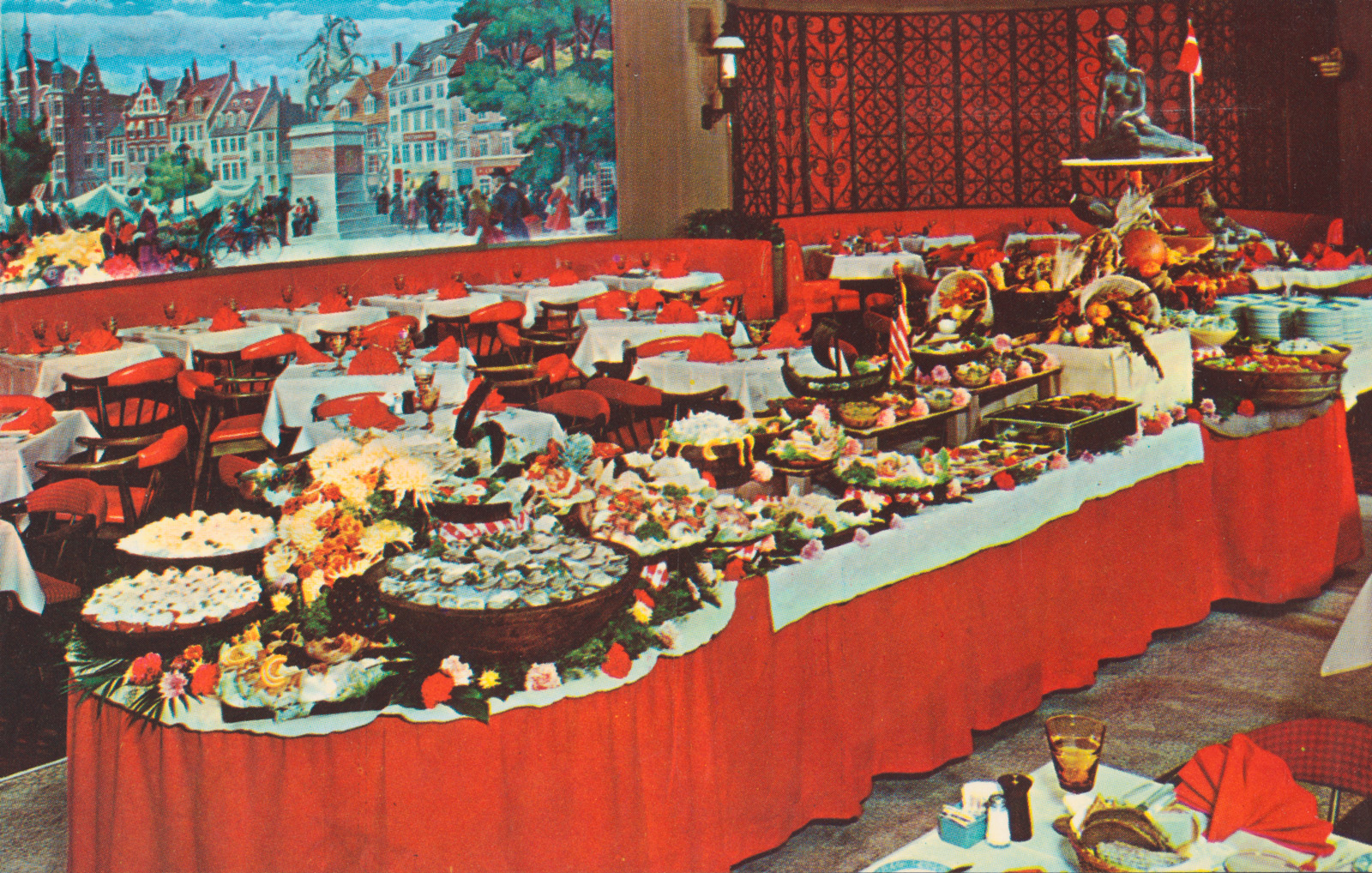
Practically every foreigner, facing for the first time a Swedish smorgasbord … is thrilled by the mere sight. The thrill does not wane under the eating; rather it increases until one is filled with a desire to repeat the experience.[1]
—Agnete Lampe and Vera Tornérhielm, Swedish Smorgasbord (1953)
Though now the English byword for variety itself, smörgåsbord (“butter board”) still meant something distinctly culinary in the United States in the middle of the twentieth century.[2] Sometimes, it referred to the traditional appetizer array of hot and cold Swedish dishes, pickled herring, and aquavit found in New York restaurants and Minnesota community halls. Usually, however, it signified not a specific cuisine but a mode of feasting: a long table laden with towers of dishes, and a line of diners snaking past, returning to fill their plates again and again. The history of the all-you-can-eat buffet is in part the story of how the smorgasbord shed its cultural specificity and became part of the great American experiment in indulgence.
That history has advanced circuitously, however. Every few years, those eager American diners have been warned of the all-you-can-eat experience’s imminent demise. This time, the endless buffet—and with it the restaurant industry at large—is said to be flagging in the face of Ozempic, manufactured by the Danish company Novo Nordisk. Will one Scandinavian export finally lay another to rest? As restaurants draft “Ozempic menus,” seeking the key to the semaglutide palate, the answer appears to be: not yet. In fact, the food industry’s response to new appetite-dampening drugs seems to echo the buffet’s carnivalesque suspension of dining conventions. In buffets and Ozempic menus, sampling menus and share plates, the same hope emerges: to circumvent satiety. But so too do the same anxieties, the same guilts and thrills, the same moralizing tensions between seeking pleasure and wielding self-restraint.
Coombs invokes a primordial era “happily oblivious of balance in diet and nutritive requirements” and blissfully ignorant of the Epicurean ideal of moderation.[4] In the smorgasbord, she sees the paradigmatic feast, “refined.” Not merely gluttony, but the “ancient flair for plenty” combined with “the French propensity for variety.”[5] In the mid-century American imagination, the smorgasbord recalled a venerable tradition of indulgence.
In fact, in its Nordic homeland, the smorgasbord was a far more moderate affair. The “butter board” emerged centuries ago on the Scandinavian peninsula as a late medieval appetizer spread of bread, butter, cheese, and spirits. The board was a form of upper-class entertainment—a prelude to a meal, eaten while standing. In the decades following the arrival of the first Swedish immigrants in the United States in the 1870s, word of the smorgasbord made land as well. Newspapers reported that Swedish steamships and hotels offered the spread before meals. The key was restraint: it was meant to fortify travelers, but not ruin their dinner.[6]
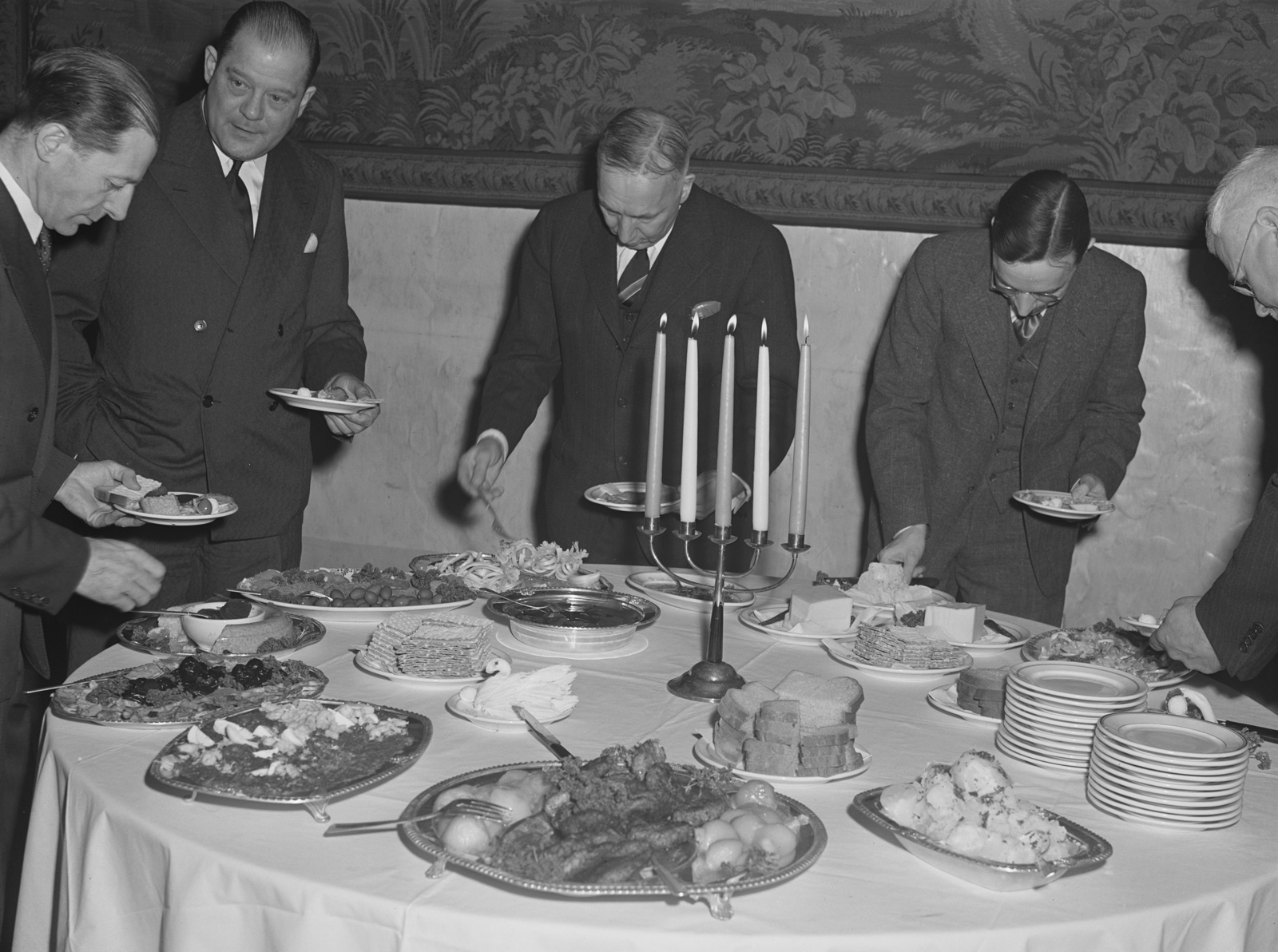
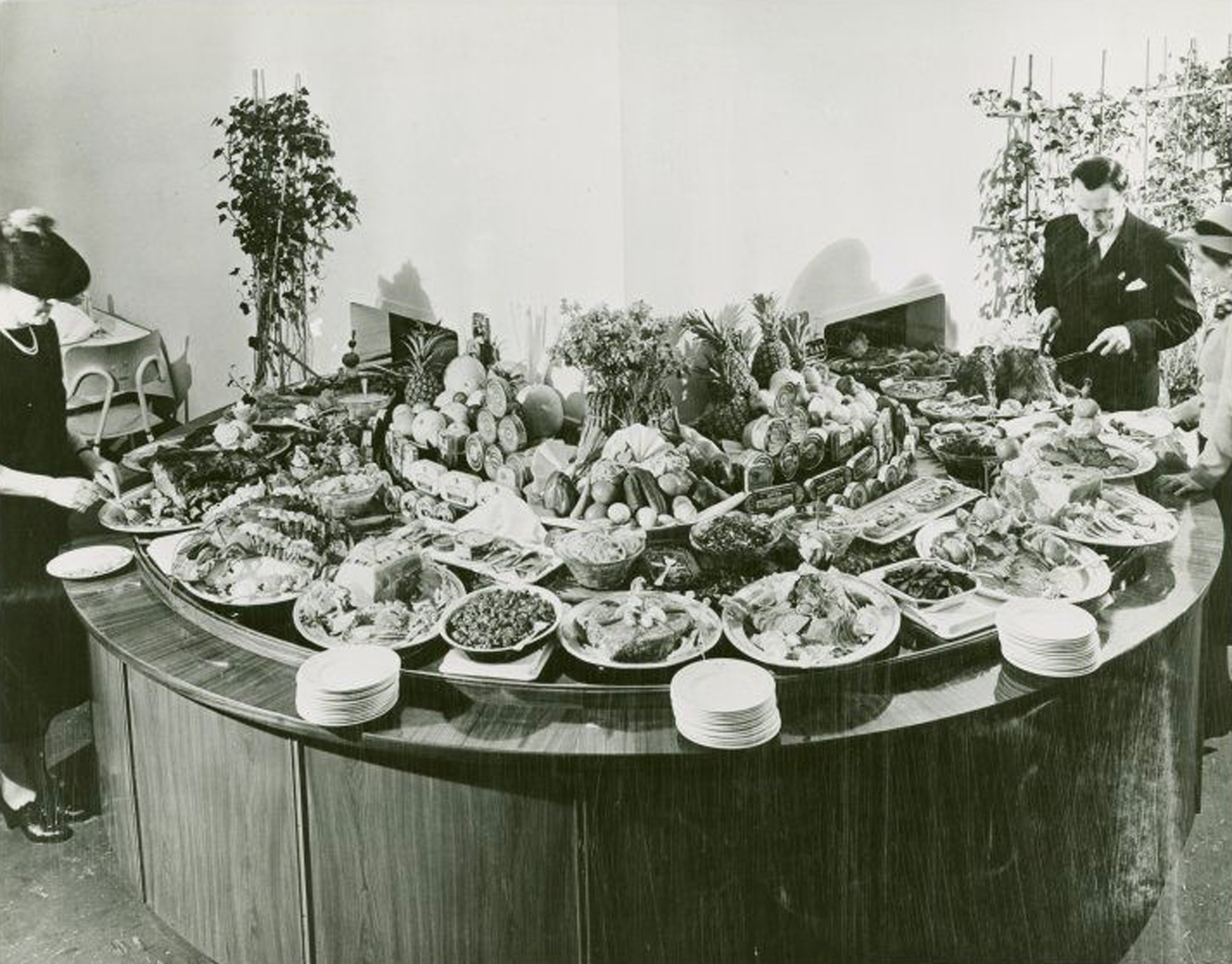
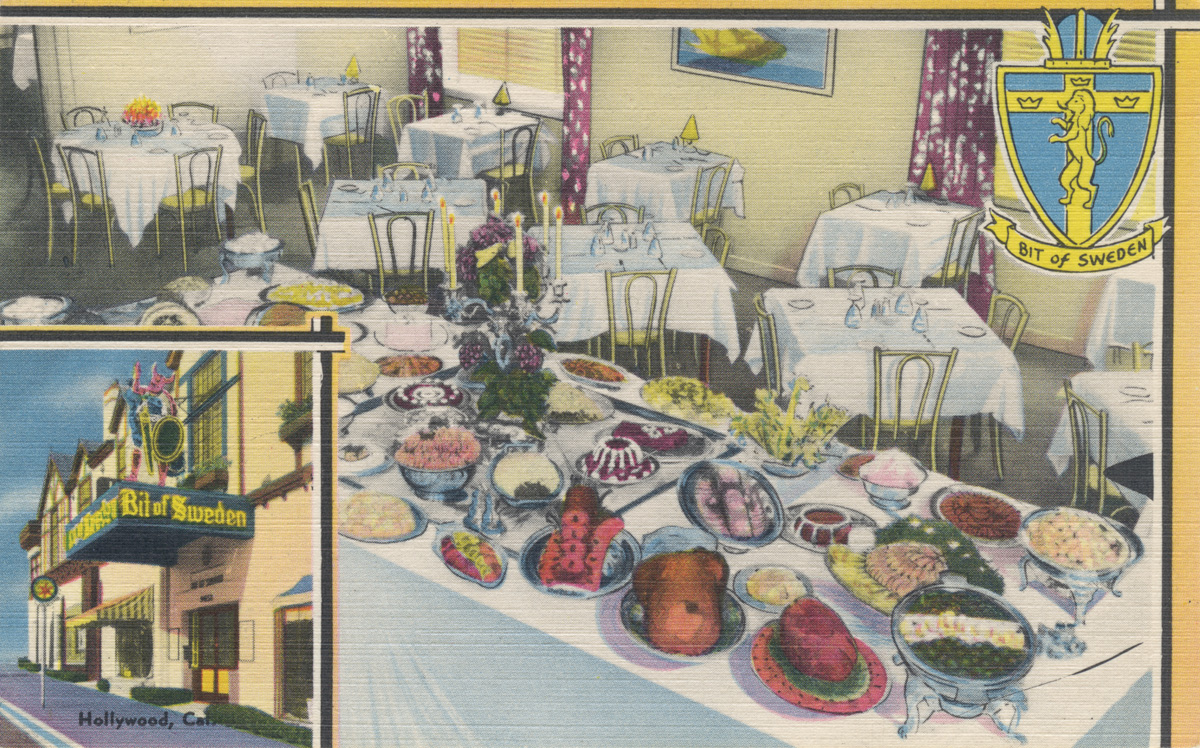
Beginning in the 1910s, and mounting through the 1930s, a growing number of Swedish restaurants started catering to the wider American public. Advertisements promoted the “famous Smörgåsbord” in New York and Chicago. In 1939, the Three Crowns Restaurant brought the smorgasbord to the New York World’s Fair, with news coverage of the event guiding a confused American audience on how best to approach the dizzying one-hundred-dish feast.[7] Instruction would apparently be needed for decades to come. As late as 1965, Scandinavian Cookbook advised its readers: “Whatever the size of the smörgåsbord, the order of eating is most important for its full enjoyment.”[8] The authors counseled a first trip for pickled herring, followed by a change of plate to clear the strong flavor for a serving of cold cuts, salads, and hot dishes, followed by cheese. Schnapps and beer en route.
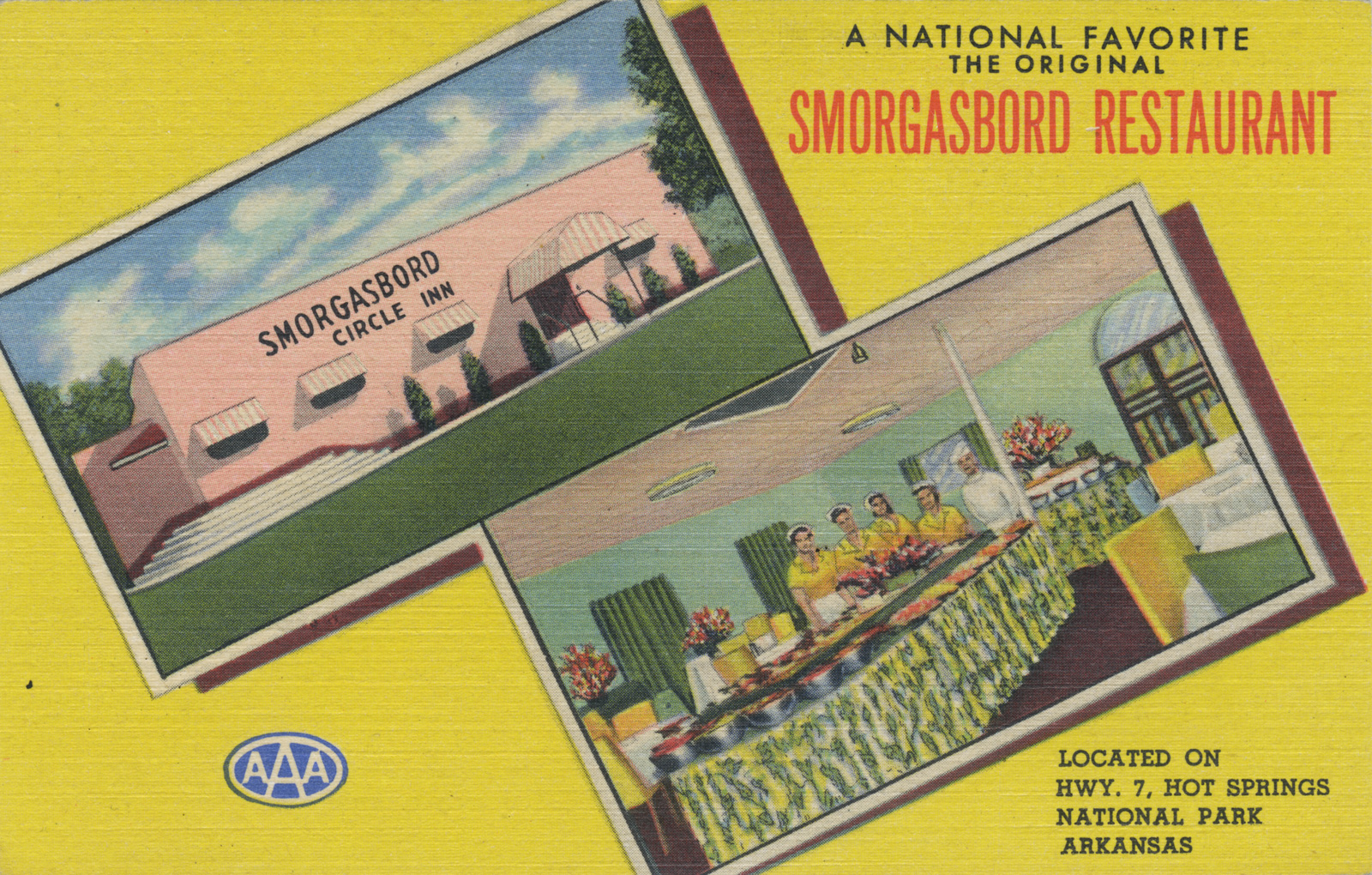
What was a restrained, more or less rule-bound affair at home in Sweden had become something entirely otherwise in the United States by the first decades of the twentieth century. Once a way for Swedish hosts to tide their guests over, the smorgasbord tended to be seen by “non-Swedish Americans,” writes food historian Jan Whitaker, “as a meal in itself.”[9] Swedish-operated restaurants leaned in, offering different pricing for the smorgasbord served as an appetizer or as lunch or dinner. A generation of “smorgies” and all-you-can-eats followed, trading on themes of the foreign. The success of the smorgasbord relied not only on variety and excess but also on clientele willing, and even eager, to serve themselves. The first establishment to offer a self-serve experience was the Exchange Buffet in lower Manhattan, which opened its doors in 1885 to busy Wall Street workers.[10] The restaurant served only men, but during the 1893 World’s Columbian Exposition in Chicago, American entrepreneur John Kruger—who had encountered the smorgasbord during a trip to Sweden—introduced the first dual-gender, self-serve eatery.[11] He called it a “cafeteria,” after the Spanish word for a coffee shop.[12]
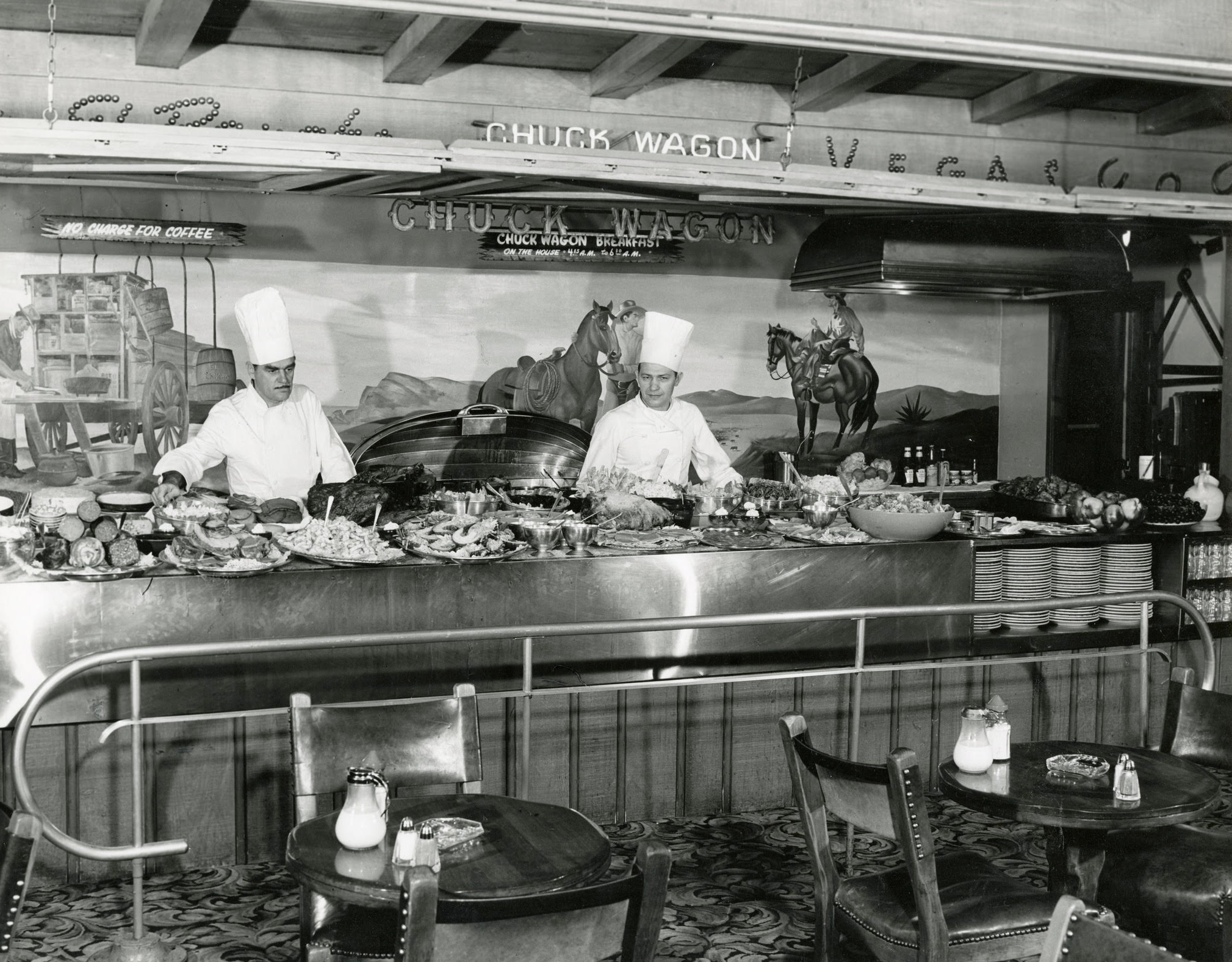
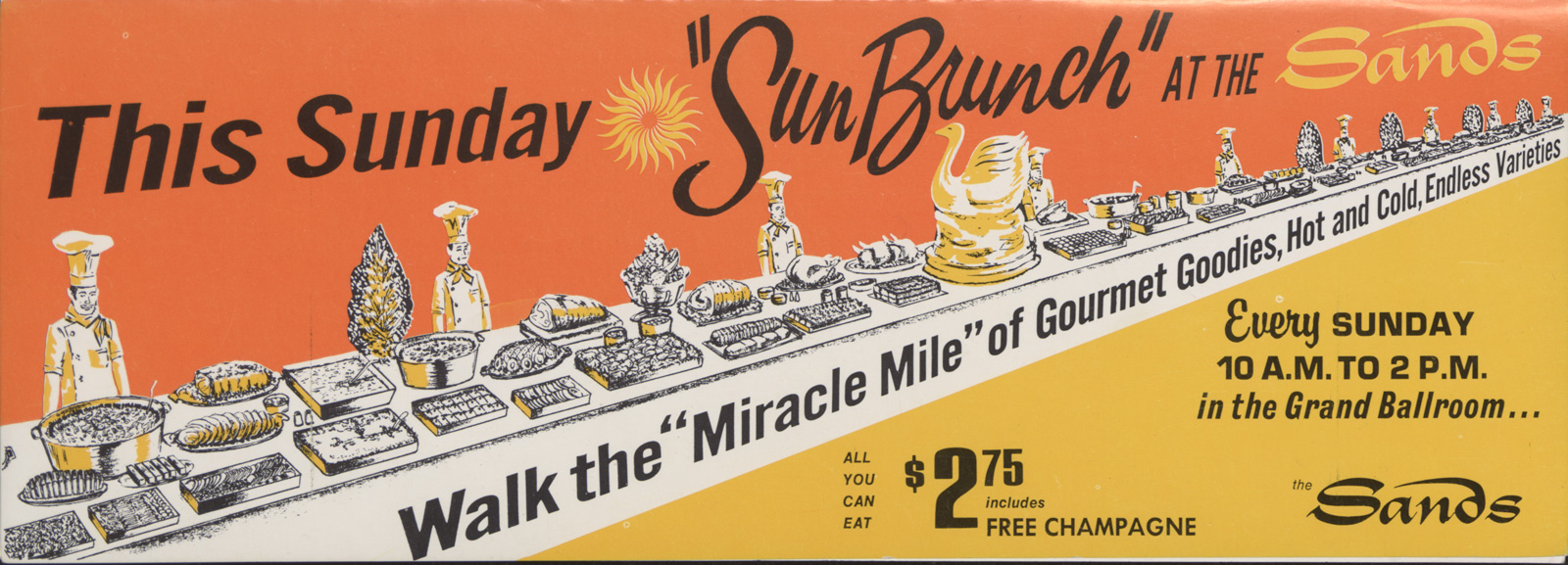
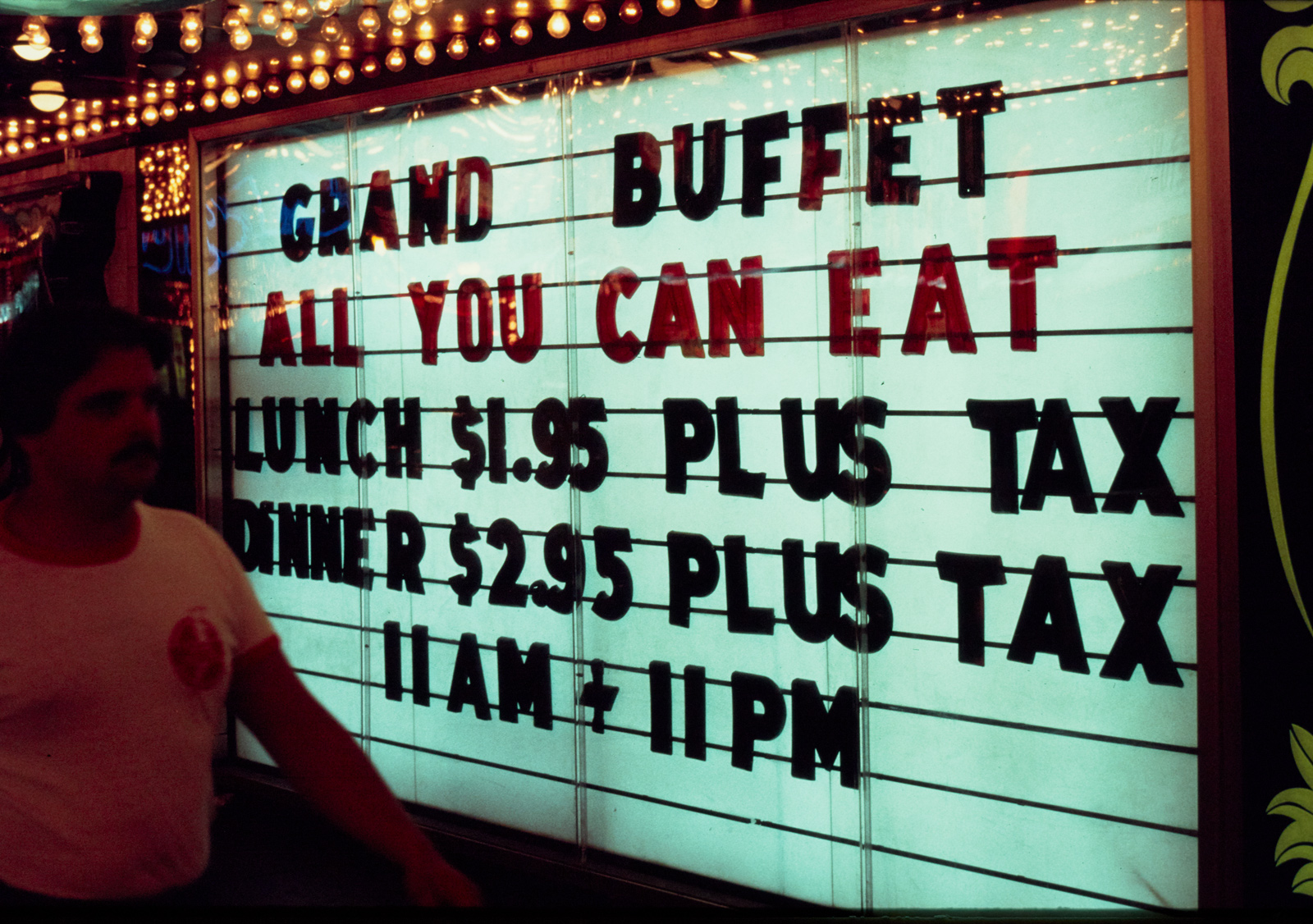
The all-you-can-eat buffet—offspring of the self-serve cafeteria and the smorgasbord—was to find its spiritual home in Las Vegas, where it became a cornerstone of the casino experience. Academic sources are sparse, but according to a contemporaneous article in a Las Vegas newspaper, the El Rancho Vegas hotel broke new ground in 1946 when it opened the Chuck Wagon buffet.[13] Originally a late-night offering, by the 1950s, the buffet at the El Rancho was open 24-7 and cost only a dollar—a model emulated by other hotels in the city. Affordable, accessible, and indulgent, the Las Vegas buffet provided the model for the “smorgys” (and their siblings, the “smorga, smorgee, & smorg-ette”) that proliferated through the 1950s and 1960s.[14] Lowbrow cultural diversity was one of the main draws, including at California’s Fjörds Smorg-Ette, Okie Frijole Mexican Smorgy, and Gong Lee’s Smorga.
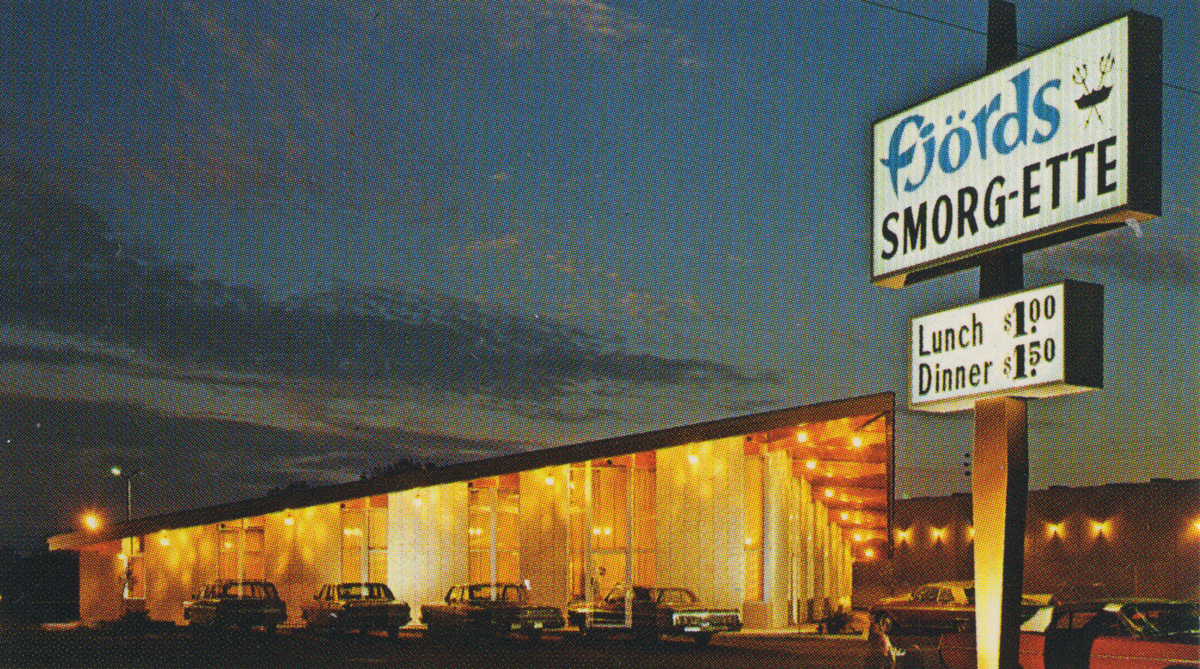
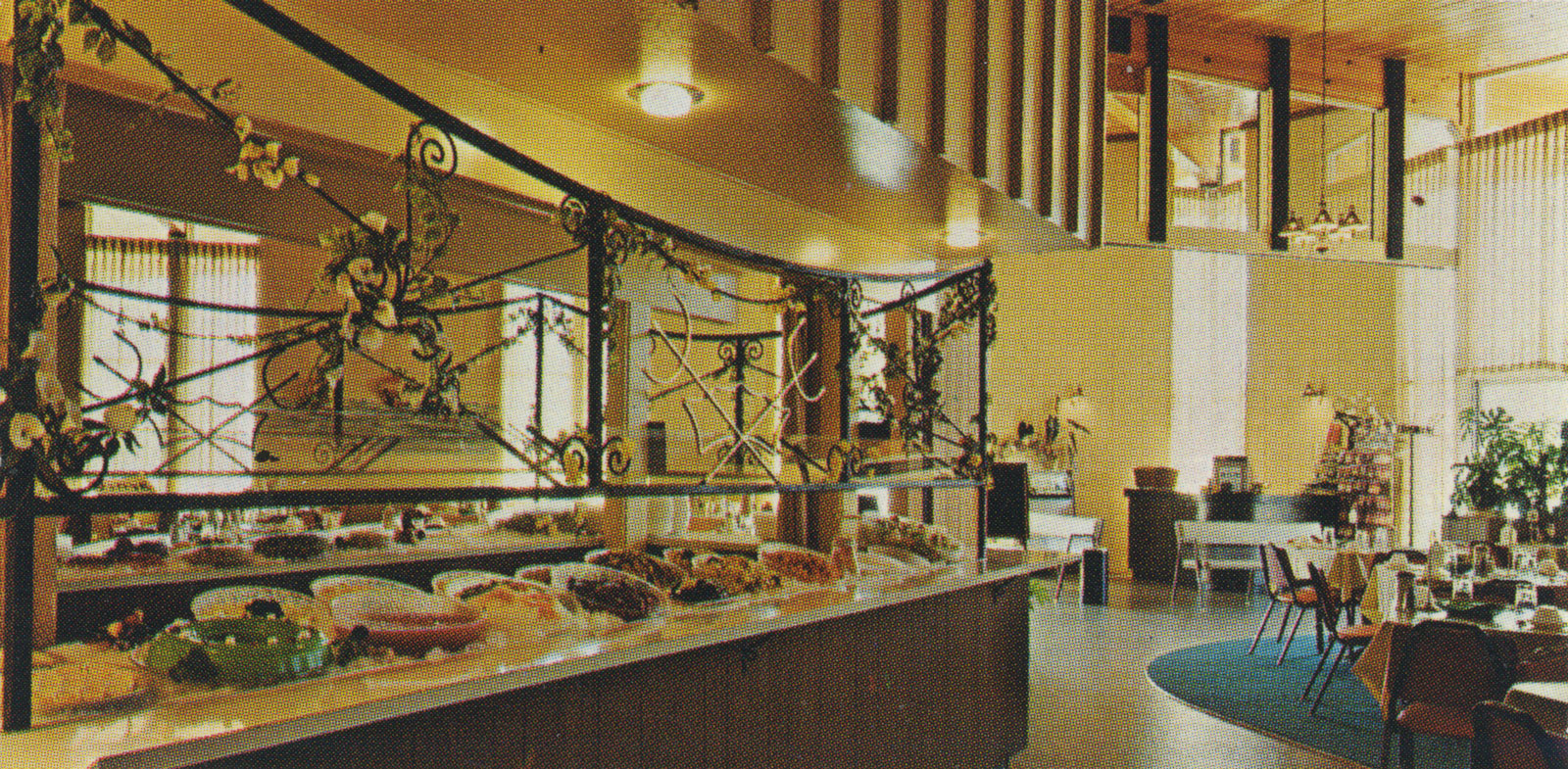
The intimate relationship between the buffet and the casino goes beyond the practical expedient of keeping gamblers fed. Both bring out something greedy and gamified. “In gambling, as in buffet culture, the house always has the edge,” writes folklorist Elizabeth Adams, but for pilgrims to the Nevada desert, the buffet is one part of the Vegas experience “in which there is no real perception of ‘loss.’”[15] Visitors trade “buffet tips,” viva voce counsel on how to wring value from the buffet that sometimes looks like a perversion of the more naive 1930s introductions to the smorgasbord. Both share an obsessive interest in the sampling order: the etiquette of the smorgasbord (herring first, plate changes) transformed into the strategy of the all-you-can-eat (avoid rice and bread, empty carbs that fill you up, and target the big-ticket items first). Visitors descend on seafood and choice cuts, forming lines “long and a little panicky” where they believe the best value can be found.[16] Today, the shape of the buffet is “learned from Las Vegas”—and that shape is not merely excess, but cultural excess. The modern buffet is still sometimes themed, but often incoherently so. “At the Rio, for example,” writes Adams of one of the most famous mid-nineties Vegas buffets, “I’ve seen plates with sushi, a slice of pizza, a slice of prime rib, a few asparagus stalks, and a taco topped with that rib crown.”[17] The herring and aquavit are long gone. In their place, everything.
On the face of it, the buffet seems carnivalesque, in Bakhtin’s sense. It is a meal in which the normal rules of eating are suspended: a collision of profanity, indulgence, and eccentricity. Profane, in that the formality of dining out (the ritual of being seated, placing an order, being waited on) goes by the wayside. Eccentric, in that the norms of everyday eating (like sweet after savory, pasta or rice) are ecstatically suspended. Indulgent, in all the obvious ways. Adams suggests that the Vegas buffet instantiates the liminal logic of vacation—a suspension of what we eat, and how we eat it.[18] When we travel, we allow ourselves to be tempted: we consume foods that we would normally avoid, and in large quantities. The all-you-can-eat—whether in Las Vegas, gaudy oasis of the American Southwest’s endless desert, or closer to home—is a permanent feast, a continual holiday. But even in this imagined space of abandon (the ancient feast of the Vikings, preserved in the Nordic smorgasbord), we do not quite return to the primeval. The smorgasbord pins the holiday feast in time and place, makes it available on demand, but fails to achieve Bakhtin’s festive social inversion. In the carnival, the king dresses in rags and the peasant in robes: at the buffet, the diner does not serve the waiter. We may commune at the buffet spread, but each table is celebrating alone: though you bump elbows, you do not break bread together. We may dive at the same clammy tower of shrimp, but it is in the spirit of competition.
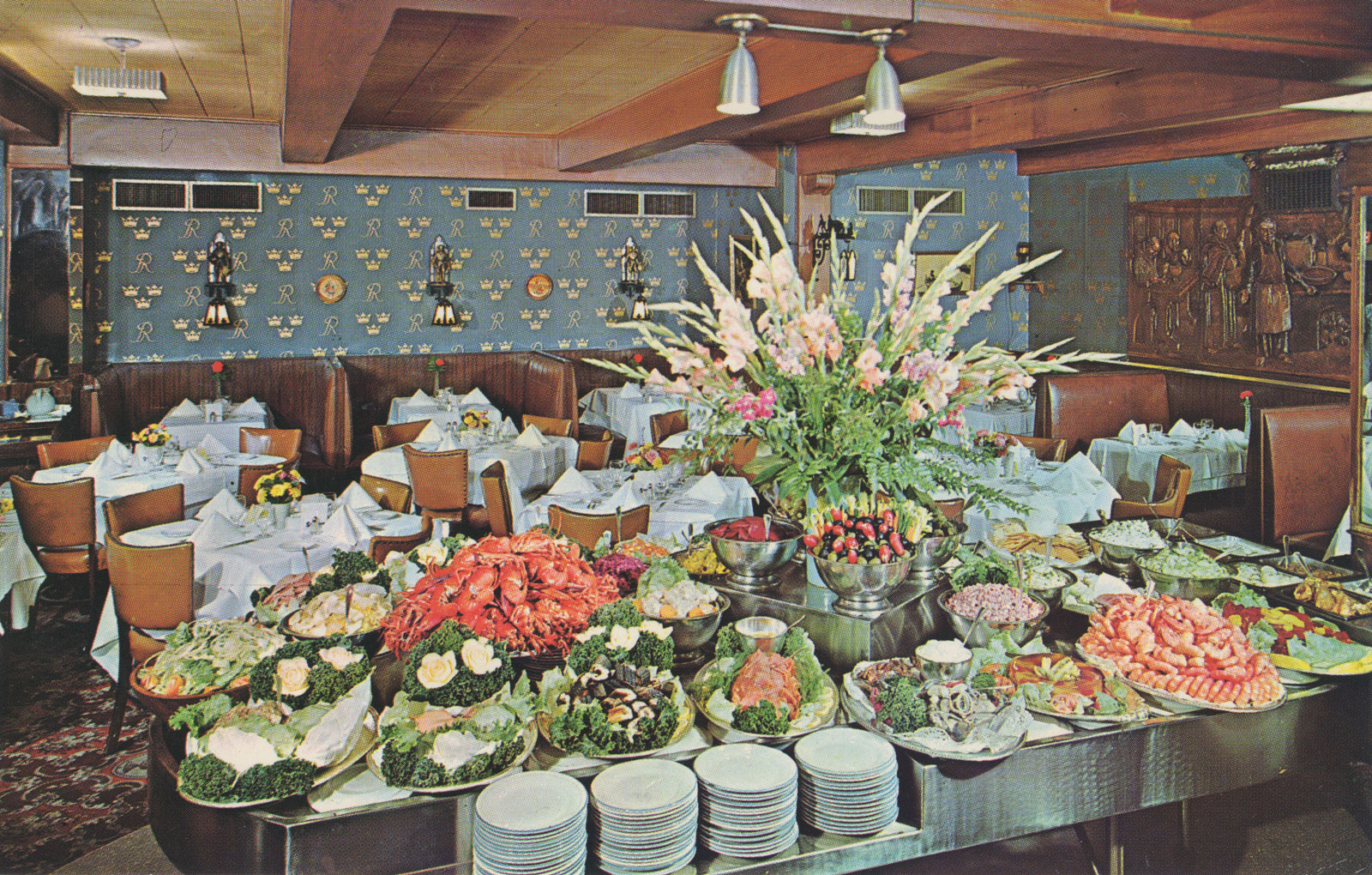
We might say that the joy of the smorgasbord is the very “hyperreal” American fondness for the simulation, for the copy. Like a wax museum, like Disneyland, the smorgasbord’s fantastic, American iteration borrows from a real phenomenon—in this case, a somewhat sober, Scandinavian spread—and perfects it, juices it up, brings it to its logical extreme for a cross-Atlantic audience. In his 1973 collection of essays Travels in Hyperreality, Umberto Eco does not visit a buffet, but would it not be a perfect addition to his travel itinerary through a world “where the American imagination demands the real thing and, to attain it, must fabricate the absolute fake; where … falsehood is enjoyed in a situation of ‘fullness,’ of horror vacui”?[19] The fabricated American smorgasbord is now, somehow, more real than its Nordic predecessor.
By mimicking the GLP-1 hormone—naturally released after eating—semaglutide works up and down the gut–brain axis, with wide-ranging effects. (Tirzepatide mimics both GLP-1 and another similar hormone, GIP.) In the gut, semaglutide slows gastric emptying and modulates postprandial blood sugar spikes, making you feel full for longer. In the central nervous system, these drugs influence hunger and satiety in complex ways. They seem to reduce cravings for so-called hyperpalatable food: everything tempting, high calorie, sweet, fatty, and salty. Exactly how it does so, however, is still being understood.
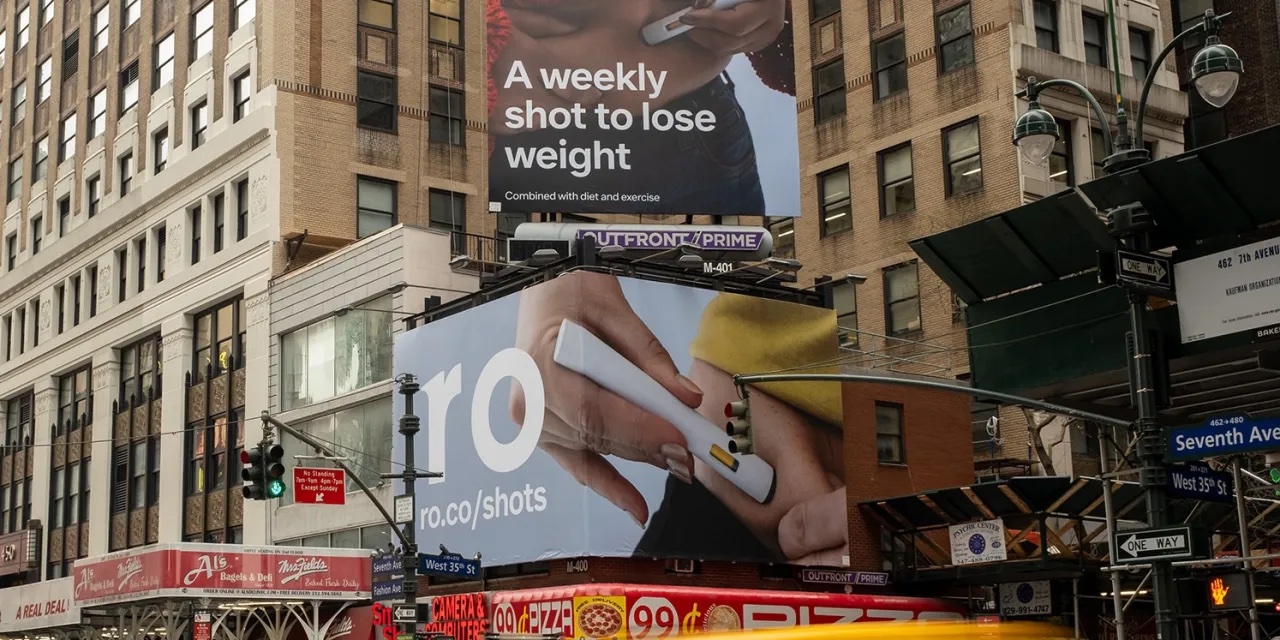
The research certainly shows that people (as well as mice and non-human primates) on semaglutide crave things less. But since the early 1990s, addiction research has increasingly separated “wanting” from “liking.”[21] While GLP-1 agonists clearly reduce people’s desire for the things they once craved, when it comes to the enjoyment of hyperpalatable food, evidence as to actual alterations in taste perception is less clear-cut: research suggests that semaglutide can change how things taste, but while some say that certain foods now taste “wrong” or “cloying,” others still report enjoying their fries in the moment.[22] Semaglutide is also being studied for its ability to reduce other kinds of cravings—not just for food, but for sex, for alcohol and nicotine, for shopping and gambling.[23] Ongoing research is investigating semaglutide for opiate addiction. [24] When it comes to alcohol, for instance, semaglutide seems able to selectively reduce the wanting while leaving the liking intact.[25]
Though it targets food cravings and inflects the pleasure of eating in complex ways, what semaglutide does not do is fully numb the desire for pleasure. Many describe the quieting of what is referred to as “food noise”—“hedonic hunger,” the nagging, intrusive desire to eat beyond what is necessary to appease the grumbles of peristalsis—as a kind of freedom. Others, however, experience the dampening of hunger as its own kind of loss. For those who find joy in food and all its accessory pleasures—cooking, eating out, planning and sharing meals—the social and sensory indulgence often go hand-in-hand. New diet drugs can manage myriad cravings, but, for some, what they cannot dampen is the memory of the pleasures of indulgence: when the cravings are gone, it’s the “wanting” we might miss.
The culinary world, meanwhile, fears other kinds of losses. “Is Ozempic killing the restaurant industry?” worries the Daily Mail. “Eateries reveal they’ve been forced to reduce portion sizes to tempt diners on weight loss drugs.”[26] The Caterer, a hospitality news website, asks: “Can restaurants survive in the new age of weight-loss drugs?”[27] The semaglutide dieter, relative to the dieter past, is more impervious to temptation. They are full faster, effortlessly conscientious. They prefer smaller, more frequent meals to avoid queasiness. The usual comforts—oil and fat, overweening sweetness and saltiness—are less compelling in imagination and on the tongue. Faced with falling revenues and unfinished meals, with mindlessly self-regulating diners, the food industry is frantically trying to reinvent itself.
Restaurateurs and at least some of their semaglutide-taking clientele are joined in a new search for pleasure. The question: How to tempt the temperate? Eco, repeating a common caricature of American overindulgence, writes: “In America you don’t say, ‘Give me another coffee’; you ask for ‘More coffee’; you don’t say that cigarette A is longer than cigarette B, but that there’s ‘more’ of it, more than you’re used to having, more than you might want, leaving a surplus to throw away—that’s prosperity.”[28] But what happens when, with chemical assistance, less is suddenly more than enough?
The food industry’s answer to the appetite suppression “crisis” looks a whole lot like the smorgasbord: tasting menus, sampling boards, flights, small bites. Variety and indulgence, marked up to recuperate losses. For instance, a Tampa-based meal service offers a “weekly rotating menu of 50+ options… No boredom, just GLP-1-friendly variety.”[29] At a fine-dining French restaurant in London, the “small appetite” menu comprises six courses of “small, exquisite ingredients, perfectly tailored.”[30] And the co-founder of a Cuban chain restaurant in the United States, whose diners can order from its GLP-Wonderful Menu™, underscores the counterintuitively heightened importance of temptation to the semaglutide dieter: “Instead of giving them boiled chicken, you have to make it super appealing.”[31]
A presenter at the 2025 National Restaurant Association Show advises “leaning into the ‘snackification of dining out,’” with “starters, shareables, small plates, half portions (but at three-quarters the price), luxury bites, and dessert flights.”[32] The website for the telehealth platform Klarity prescribes weight-loss drugs on one page and suggests amenable dining options on another. “Tapas Style Eating; Sharing Is the New Normal,” reads one subheading.[33] Cultural variety is on the menu too: Klarity lists “cross-cultural dining experiences” that “naturally align with reduced appetites,” including dim sum, sushi, meze, and thali. This is the familiar buffet fantasy—cultural excess, sampling, and limitless choice—recast for a new era of medicalized dining.
Does it work? Can the sampling platter muscle its way past the raised defenses of semaglutide-assisted temperance? Studies show that all manner of experimental subjects—humans, rats, cats—eat far more when presented with a buffet-style meal than when faced with just one option.[34] Variety thwarts satisfaction; it induces desire. The buffet, regardless of its scale and its dishes, offers the hyperpalatability of choice itself. Acting, as they seem to do, in most of the nooks and crannies of our physiological hunger and digestion pathways, drugs like Ozempic may also buffer against this so-called buffet effect.[35] And yet, the buffet survives as a psychological antidote to the weight-loss drug dilemma: as a way to wring more pleasure from the fewer bites one can stomach.
Restaurant industry reporting is not a subtle genre. But like all food writing, it speaks to the sensuous. In the new Ozempic menu literature, the restaurateur’s concern for the bottom line becomes an earnest concern for the diner’s lost gratification. As a French chef at a London fine-dining restaurant put it: “Eating isn’t just to keep the body alive, it’s to derive pleasure.”[36] Bakery & Snacks, a global market news site, quotes an executive at a nutritional formula company: “This isn’t about swapping in new ingredients. … It’s about redefining what ‘satisfaction’ means when traditional appetite cues are diminished.”[37] It should be no surprise that pleasure is located, at least partly, in desire rather than in its fulfillment: in the hunger rather than in the being full.
The smorgasbord evokes a very specific kind of pleasure: the “thrill” of bottomless hunger, of the appetite reinvigorated by the buffet spread. A thrill, as Agnete Lampe and Vera Tornérhielm wrote of the smorgasbord in 1953, that “does not wane under eating” but rather “increases until one is filled with a desire to repeat the experience.”[38] This is the special appeal of variety, rather than mere abundance. Though the satisfaction of a single type of food dwindles as one eats it, a new flavor can renew the appetite again and again—the new stimulus overriding one’s sense of fullness. It would not be until 1981 that behavioral scientists Barbara J. and Edmund T. Rolls named this process “sensory-specific satiety.”[39] But the buffet had capitalized on the phenomenon long before.
In his article “Cold War ‘Super-Pleasure,’” medical historian Otniel Dror traces a mid-century shift in how behavioral science understood human motivation. The traditional model, “drive-reduction” theory, held that people experience “reward” only when a concrete need or “drive” is fulfilled: we eat because we’re hungry, and the feeling of pleasure is simply the hunger going away. The discovery of pleasure centers in the brain prompted a new paradigm, one in which the “neurological self was a pleasure seeker” rather than just a drive-reducer.[40] In other words, we do not merely eat to negate the feeling of hunger, and pleasure isn’t just relief from deprivation: we eat because eating can itself be rewarding.
Evidence for humans as pleasure-seekers came from an accident: in his laboratory, psychologist James Olds misplaced an electrode in a rat’s brain, striking what researchers would come to understand as a pleasure center. Stimulating it produced something like hunger—but because it worked on the hypothalamus rather than the motor cortex, hunger without a refractory period. Unlike ordinary hunger, this artificial hunger couldn’t be resolved through eating; and instead of impelling rats to seek out food, this artificial hunger seemed to be experienced as an ecstatic high. The result was an animal who would forsake eating, drinking, and sex to press a lever, wasting away as it delivered shocks to its forebrain again and again. The animal was “satiated, nondeprived,” writes Dror, “yet constantly ‘hungry’ for more reward—for, in fact, more ‘hunger.’” “Why would a rat frantically press a lever that made it hungry,” experimenters asked, “and why was it rewarding for the rat?”[41]
The answer, paradoxically, is that Olds’s rats experienced “wanting” as a state of arousal. The same, researchers in addiction psychology began to suspect, might be true of us: sometimes hunger, rather than being merely the thing that compels us to eat, might be an end in itself. Sometimes we chase the feeling of being full, the satisfaction of getting what we “like,” but we can also get hooked on the compulsive reflex of “wanting.” As Olds summed it up, in 1970: “eating begets eating.”[42]
Post-war science yielded, with little exaggeration, the discovery of pleasure itself: pleasure as a positive entity rather than the mere “negation of a negation” it had been imagined for millennia, beginning with Plato and the Epicureans.[43] This discovery also prompted a reimagination, in mid-century popular literature, of the danger of “super-pleasure”: What kind of ecstasy could drive a rat to neglect its most basic needs in favor of onanistic lever-pushing? In what ways did the pleasure-seeking lab rat parallel humans, especially in a new world of “abundance and consumption”?[43] And, as many science fiction writers agonized, could such a pleasure be co-opted by malignant forces? The specter of insatiability immediately raised questions of mind control: hypnosis, propaganda, and irresistible intoxicants.
Most people will never experience the fathomless, hypothalamic hunger of Olds’s self-stimulating rats (neither, for that matter, will most rodents). Yet the buffet-going human and the wired-up rat both understand, intuitively, how “wanting” can exist apart from the question of gratifying that want.
The anxiety of Cold War super-pleasure research parallels the anxiety conjured by the all-you-can-eat buffet: each is concerned with the joy of hunger, with the special pleasure of insatiability, with aspirational overindulgence. Both speak to the long tradition of moralizing around self-control at the table: watching one’s waist, watching one’s plate. Even in 1965, the writers of one cookbook warned that the Scandinavian buffet was in decline due to its disagreement “with the general trend towards calorie-watching.”[45] The smorgasbord—or more specifically, its American expression—has always been in tension with the middle-class dieter’s mores around self-control and “healthy choices.”
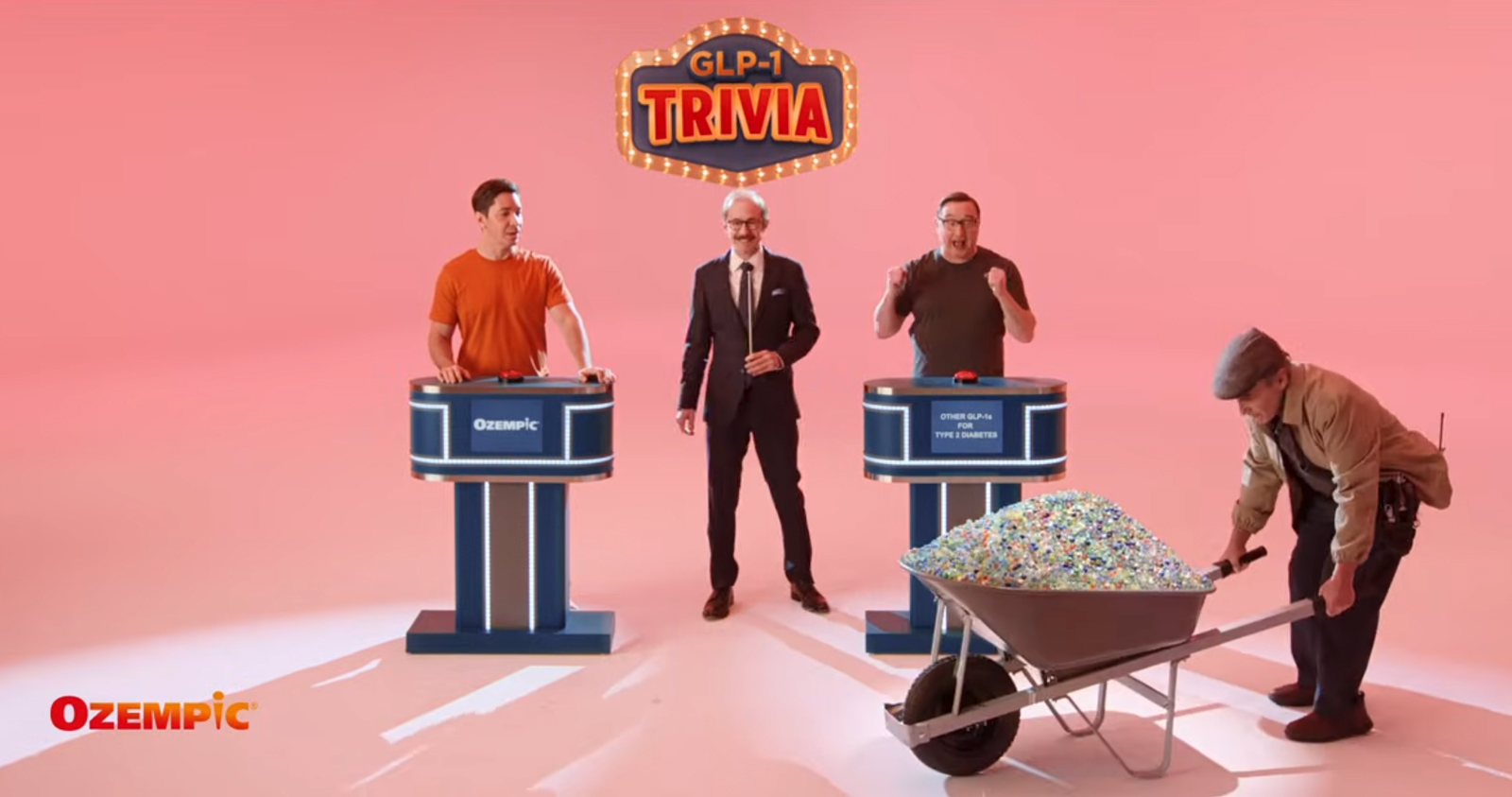
Today, the semaglutide era offers an inversion of the dieter’s morality. Semaglutide is where the admonishment to “eat mindfully” withers and dies, the phantom of super-pleasure is finally laid to rest, and the buffet’s near-supernatural power over appetite and consumption is bridled. It’s not that semaglutide dieters have the same urges, and are better able to resist them—that would be continence, a different philosophical model of self-restraint. Instead, by moderating and modifying cravings, GLP-1 agonists help users “approximate temperance.”[46] The approval reserved for the successful dieter (for their repeated feat of will) and disapproval for the moral failure of the obese are in flux. Pharmaceutical temperance is in the midst of redefining indulgence and abnegation. The new dieter can, paradoxically, be a pleasure-seeker.
Even if the heyday of the Vegas all-you-can-eat buffet is in the past, the smorgasbord’s demise does not seem to have arrived. Have we reached a new era of non-neurotic constraint? Can we finally trust our guts? It remains to be seen. But semaglutide does introduce a break into the very American dialectic between the thrill and the fear of the buffet. The fear can be managed at the pharmacy; the thrill, at last, is true abandon at the dinner table. (Too bad, of course, that this new pleasure will often be dampened: diet drugs tend to quiet cravings in lockstep with hunger.)
In English, we describe the pleasure of eating as the gratification of a pre-existing appetite. We slake our thirst, we satisfy our hunger. We know when to stop because we are “full.” The modern diet—processed and convenient, in heaping portions—has undermined that specific form of satisfaction. A new generation of powerful weight-loss drugs raises old but unresolved questions about pleasure and restraint. These drugs demand that we acknowledge the paradoxically potent pleasure of knowing when to stop, but they also draw our attention to the special pleasure of hunger.
New diet drug research seems to point to the interrelatedness of all the good things life offers, to a biological basis for our jumbled vocabulary of yearnings. No coincidence that we “devour” our loved ones with our eyes and “starve” for their attention. No wonder that we are “intoxicated” by lust, that love lost is said to feel like “withdrawal,” and that we “crave” everything from adventure to notoriety. A single injection can dull the drive to shop and to gamble, to drink and to use, to masticate and to fornicate. Temperance in a bottle; what would the Epicureans have to say about that?
- Agnete Lampe and Vera Tornérhielm, Swedish Smorgasbord (Stockholm: AB Lindqvists Förlag, 1953), p. 3. Available at archive.org/details/swedishsmorgasbo00lamp/mode/1up.
- Smör means butter in Swedish: a cognate with the English word
schmear (meaning, a spread). Gås literally means goose, but refers here to the small bits of butter that bob to the surface as cream is churned. A smörgås is just right for shmearing onto a piece of bread, which is why it also came to mean an open-faced sandwich in Swedish. Add bord, or table, and we’ve arrived at the modest snack that preceded the modern smörgåsbord. - Anna Olsson Coombs, The Smörgåsbord Cookbook (New York: A. A. Wyn, 1949), p. 5. Available at archive.org/details/TheSmorgasbordCookbook/mode/1up.
- Ibid., p. 5.
- Ibid., p. 6.
- Jan Whitaker, “The Smörgåsbord Saga,” Restaurant-ing Through History (blog), 22 January 2023. Available at restaurant-ingthroughhistory.com/2023/01/22/the-smorgasbord-saga.
- Ibid.
- Greta Borgstrom and Birgit Danfors, Scandinavian Cookbook: A Culinary Guide to Denmark, Finland, Norway, Sweden (Copenhagen: Gyldendal, 1965), p. 10. Available at archive.org/details/scandinaviancook00borg/mode/2up.
- Jan Whitaker, “The Smörgåsbord Saga.”
- Andrew P. Haley, Turning the Tables: Restaurants and the Rise of the American Middle Class, 1880–1920 (Chapel Hill: University of North Carolina Press, 2011), p. 183. Available at archive.org/details/turningtablesres0000hale/mode/2up.
- Carol Dawson and Carol Johnston, House of Plenty: The Rise, Fall, and Revival of Luby’s Cafeterias (Austin: University of Texas Press, 2006), p. 23.
- Ibid.
- This clipping is quoted in “Who Invented the Las Vegas Buffet?,” Vintage Las Vegas (9 July 2026). Available at vintagelasvegas.substack.com/p/who-invented-the-las-vegas-buffet.
- Jan Whitaker, “All You Can Eat,” Restaurant-ing Through History (blog), 15 May 2023. Available at restaurant-ingthroughhistory.com/2016/05/15/all-you-can-eat.
- Elizabeth Adams, “All Those Mounds of Shrimp: Las Vegas Buffets Considered,” Western Folklore, vol. 67, no. 2–3 (Spring–Summer 2008), p. 238.
- Ibid., p. 241.
- Ibid., p. 243.
- Ibid., p. 246.
- Umberto Eco, Travels in Hyperreality, trans. William Weaver (San Diego, CA: Harcourt Brace Jovanovich, 1986), p. 8.
- KFF, “Poll: 1 in 8 Adults Say They Are Currently Taking a GLP-1 Drug for Weight Loss, Diabetes or Another Condition, Even as Half Say the Drugs Are Difficult to Afford,” 14 November 2025. Available at kff.org/public-opinion/poll-1-in-8-adults-say-they-are-currently-taking-a-glp-1-drug-for-weight-loss-diabetes-or-another-condition-even-as-half-say-the-drugs-are-difficult-to-afford.
- Terry E. Robinson and Kent C. Berridge, “The Incentive-Sensitization Theory of Addiction 30 Years On,” Annual Review of Psychology, vol. 76 (2025).
- For an example of research suggesting that GLP-1 agonists alter taste, see Rafa Khan and Richard L. Doty, “GLP-1 Receptor Agonists Significantly Impair Taste Function,” Physiology & Behavior, vol. 291 (15 March 2025). For user-reported experiences of changes in taste, see Lori Youmshajekian, “Why Ozempic and Wegovy Might Change Some People’s Favorite Foods” (online only), Scientific American, 30 April 2025. Available at scientificamerican.com/article/why-ozempic-and-wegovy-might-change-your-favorite-food.
- For further reading on the use of semaglutide in treating addiction, see Carl Dimitri, “A Turning Point in Addiction Psychiatry?,” Brown University School of Public Health, 24 July 2025. Available at sph.brown.edu/news/2025-07-24/brain-science-glp-1s-addiction.
- James H. O’Keefe, W. Grant Franco, and Evan L. O’Keefe, “Anti-Consumption Agents: Tirzepatide and Semaglutide for Treating Obesity-Related Diseases and Addictions, and Improving Life Expectancy,” Progress in Cardiovascular Diseases, vol. 89 (March–April 2025).
- Juan David Marquez-Meneses, Santiago Arturo Olaya-Bonilla, Samuel Barrera-Carreño, Lucía Catalina Tibaduiza-Arévalo, Sara Forero-Cárdenas, Liliana Carrillo-Vaca, Luis Carlos Rojas-Rodríguez, Carlos Alberto Calderon-Ospina, and Jesús Rodríguez-Quintana, “GLP-1 Analogues in the Neurobiology of Addiction: Translational Insights and Therapeutic Perspectives,” International Journal of Molecular Sciences, vol. 26, no. 11 (1 June 2025), p. 6. Available at mdpi.com/1422-0067/26/11/5338.
- Lydia Hawken, “Is Ozempic Killing the Restaurant Industry? Eateries Reveal They’ve Been Forced to Reduce Portion Sizes to Tempt Diners on Weight Loss Drugs,” Daily Mail (London), 2 November 2024. Available at dailymail.co.uk/lifestyle/article-14010613/Ozempic-restaurant-industry-profits.html.
- Lucy Tobin, “The Ozempic Movement: Can Restaurants Survive in the New Age of Weight-Loss Drugs?,” The Caterer, 15 September 2025. Available at thecaterer.com/indepth/the-ozempic-movement-can-restaurants-survive-in-the-new-age-of-weight-loss-drugs.
- Umberto Eco, Travels in Hyperreality, p. 8.
- FitEx Meals, “Why FitEx Meals Is Your Go-To Choice for GLP-1 Friendly Meals.” Available at fitexmeals.com/fitex-meals-glp1-friendly-ozempic-wegovy.
- Lucy Tobin, “The Ozempic Movement.”
- Joel Stein, “GLP-1 Course Menu,” Fine Dining Lovers, 16 October 2025. Available at finedininglovers.com/explore/articles/glp-1-course-menu.
- Leigh Anne Zinsmeister, “How to Think about Menu Development in the Age of GLP-1 Use,” Food Service Director, 19 May 2025. Available at foodservicedirector.com/food-beverage-trends/how-to-think-about-menu-development-in-the-age-of-glp-1-use.
- Klarity, “Dining Out on GLP-1 Medications: Navigating Restaurant Menus without Wasting Food,” Klarity (blog), 7 August 2025. Available at helloklarity.com/post/dining-out-on-glp-1-medications-navigating-restaurant-menus-without-wasting-food.
- Hollie A. Raynor and Leonard H. Epstein, “Dietary Variety, Energy Regulation, and Obesity,” Psychological Bulletin, vol. 127, no. 3 (May 2001), p. 326. Available at apa.org/pubs/journals/releases/bul1273325.pdf.
- For a discussion of these pathways, see Sarah V. Applebey, Allison G. Xiao, Erin P. Harris, Caleb Levine, Drew L Belser, Caroline E. Geisler, Marise B. Parent, Debra A. Bangasser, Richard C. Crist, Benjamin C. Reiner, and Matthew R. Hayes, “Characterizing Brainstem GLP-1 Control of Sensory-Specific Satiety in Male and Female Rats Across the Estrous Cycle,” Biological Psychiatry, vol. 98, no. 3 (1 August 2025). Available at pmc.ncbi.nlm.nih.gov/articles/PMC12255522.
- Lucy Tobin, “The Ozempic Movement.”
- Gill Hyslop, “GLP-1 and the Rise of Mood Foods: A New Appetite for Functional Indulgence,” Bakery & Snacks (blog), 10 July 2025. Available at bakeryandsnacks.com/Article/2025/07/10/how-glp-1-drugs-are-reshaping-snacks-indulgence-and-mood-foods.
- Agnete Lampe and Vera Tornérhielm, Swedish Smorgasbord, p. 3.
- Barbara J. Rolls, Edmund T. Rolls, Edward A. Rowe, and Kevin Sweeney, “Sensory Specific Satiety in Man,” Physiology & Behavior, vol. 27, no. 1 (July 1981), p. 137.
- Otniel E. Dror, “Cold War ‘Super-Pleasure’: Insatiability, Self-Stimulation, and the Postwar Brain,” Osiris, vol. 31 (2016), p. 232.
- Ibid., p. 246.
- Ibid., p. 247.
- Ibid., p. 232.
- Ibid., p. 248.
- Greta Borgstrom and Birgit Danfors, Scandinavian Cookbook, p. 10.
- Matthew C. Haug, “The Ozempic Era Should Change How We Think about Self-Control,” Psyche, 19 November 2025. Available at psyche.co/ideas/the-ozempic-era-should-change-how-we-think-about-self-control.
Thea Applebaum Licht is a writer and researcher based in Boston, Massachusetts. She studies the history of science as a PhD student in MIT’s HASTS program and holds a bachelor’s degree in history and Germanic studies from the University of Chicago. She is assistant editor of The Public Domain Review.
Spotted an error? Email us at corrections at cabinetmagazine dot org.
If you’ve enjoyed the free articles that we offer on our site, please consider subscribing to our nonprofit magazine, which includes unlimited access to all our archives.